 Walt
Walt
Travis Kelce's podcast pays more than his day job. The three-year Wondery deal he signed in August 2024 was reported at more than $100 million — ahead of the total value of his active NFL playing contract.
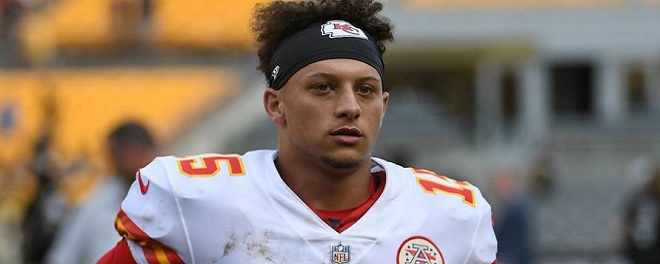
That number reframes how you read the two most valuable Chiefs. Patrick Mahomes and Kelce are no longer just a quarterback and a tight end with endorsement money attached. They are equity holders and content operators, and the off-field balance sheet is now the bigger story.
Patrick Mahomes' Off-Field Portfolio
Patrick Mahomes' NFL contract remains the foundation. He signed a 10-year, $450M extension with the Kansas City Chiefs in July 2020, giving him an average annual value of $45M. In September 2023, the contract was restructured to guarantee $210.6M across 2023–2026, then the largest four-year guarantee in NFL history. Further restructures followed in 2024, 2025 and 2026, while his 2025 cash earnings were reported at roughly $50M by Spotrac.
In numerous interviews, Mahomes noted that he "understood that the deal meant he was set for life."
That is only half the balance sheet.
How much does Patrick Mahomes earn per year?
His average annual earnings from sports-related activities total $45 million; according to Spotrac, his earnings in 2025 amounted to approximately $50 million, and that’s just from his contract with the Chiefs. At the same time, his non-athletic ventures are growing: revenue from endorsement deals with Adidas, Oakley, and Head & Shoulders, as well as income from ownership stakes in franchises, totaled about $30 million in 2025.
Patrick Mahomes, the star quarterback of the Kansas City Chiefs, has built one of the most diversified and successful investment empires among active athletes. Leveraging his record-breaking NFL contract and advertising revenue, he actively invests in sports franchises, fitness technology, and consumer brands.
Mahomes became a Kansas City Royals co-owner in 2020, then added Sporting Kansas City, the Kansas City Current alongside Brittany Mahomes, and the Miami Pickleball Club. In 2024 he bought into BWT Alpine F1 through Otro Capital. He also holds a stake in KMO Burger LLC, which as of May 2025 operates all 29 Whataburger locations across Kansas City, Springfield, Branson and Joplin.
Travis Kelce and the New Media Economy
Travis Kelce has taken a different route. His biggest asset is not a restaurant portfolio or a collection of sports franchises. It is an audience.
New Heights launched in 2022 with Wave Sports + Entertainment, built around Kelce and his brother Jason. In August 2024 it moved to Amazon's Wondery on a three-year deal reported at more than $100 million. Wave Sports + Entertainment stayed on as producer.
Look at what Wondery actually bought. Exclusive global ad sales, distribution rights across audio and video, and merchandise rights — the monetization layer, not the show itself. The podcast remains free everywhere. Amazon is paying for the audience and the commercial rails around it, which is why the headline figure clears the value of Kelce's playing contract. The 2024 iHeartPodcast Award for Podcast of the Year confirmed the show is not a novelty side project.
Strategically, Kelce is running the same play as Mahomes through a different asset class. Mahomes buys into existing franchises. Kelce built the asset himself: direct-to-fan audience infrastructure that he controls and can license out. The audience surge that followed his 2023 profile spike accelerated it, but the structure was already in place.
He is also inside the Otro Capital group that took a position in Alpine F1 in 2024, alongside Mahomes, Rory McIlroy, Anthony Joshua and Trent Alexander-Arnold.
The Digital & Gaming Play: Where NFL Money Is Flowing Next
The investment picture is more complicated in gambling than it is in media. NFL players are not free to put money into sportsbooks or other gambling businesses while they are active, but the league draws a clear line between players, franchise owners and former stars.
For active players, the restrictions are strict. They cannot hold financial interests or make direct investments in sportsbooks or online casinos.
Former players have even more freedom. Once their playing careers are over, NFL stars can use their reputation, audience and capital to enter sectors that were off limits during their careers. Tom Brady, for example, has built a broad investment portfolio spanning technology, media and other emerging businesses.
The league itself has gone further still. In 2026, the NFL signed multiyear agreements with DraftKings, FanDuel and Fanatics Betting and Gaming. It also owns a stake in Genius Sports, which distributes official NFL data to hundreds of sportsbooks worldwide. The league is not simply selling advertising space to gambling companies. It has built financial exposure to the infrastructure supporting the wider betting ecosystem.
This makes the sector increasingly relevant to the broader sports investment story. The growth of regulated sports betting is not limited to the US. Across Europe, licensing frameworks are creating established markets in which gambling companies compete for audiences through sponsorships, digital campaigns and partnerships with sports properties.
Poland is a good example of how this market continues to evolve. New brands entering the regulated sector add another layer to an already competitive environment, while established companies continue to invest in digital visibility and sports-related audiences. For anyone following these changes, resources such as slotsjudge-pl.com make it easier to see which brands have launched recently in the Polish market and how the competitive landscape is changing.
Why This Business Model Outlasts the Career
The point of all this is separation — lifetime earnings decoupled from athletic performance. A running back gets roughly three productive years of NFL income and then the market moves on. A stake in the Royals or Alpine F1 does not care about a torn ACL. Neither does a media rights deal built on an audience the athlete owns outright.
That has changed the advice reaching younger players. Rookies signing their first pro deals are now being pushed toward equity positions and content ownership from day one, rather than waiting for a second contract to start building. Some of it will not work. The structure is sound regardless.
For the next generation of NFL stars, the question has shifted. It is no longer how big the contract is. It is what they own when it ends.
 Charlie Campbell