 Charlie Campbell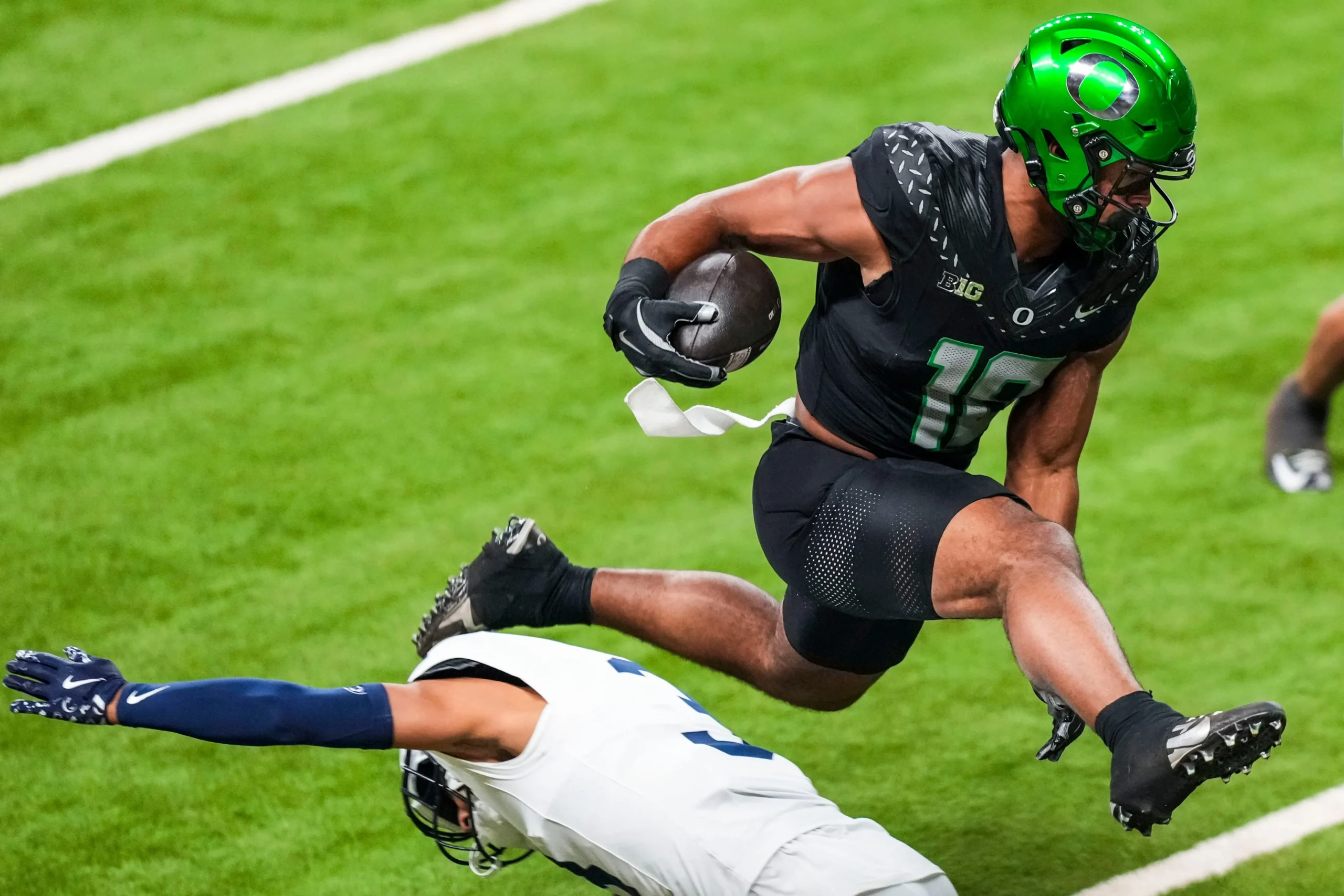
Position Review: Tight Ends
Tight End ClassEarly-round talent: B
Mid-round: A-
Late-round: A
Overall grade: A-
2025 prospects vs 2026
Colston LovelandTyler Warren
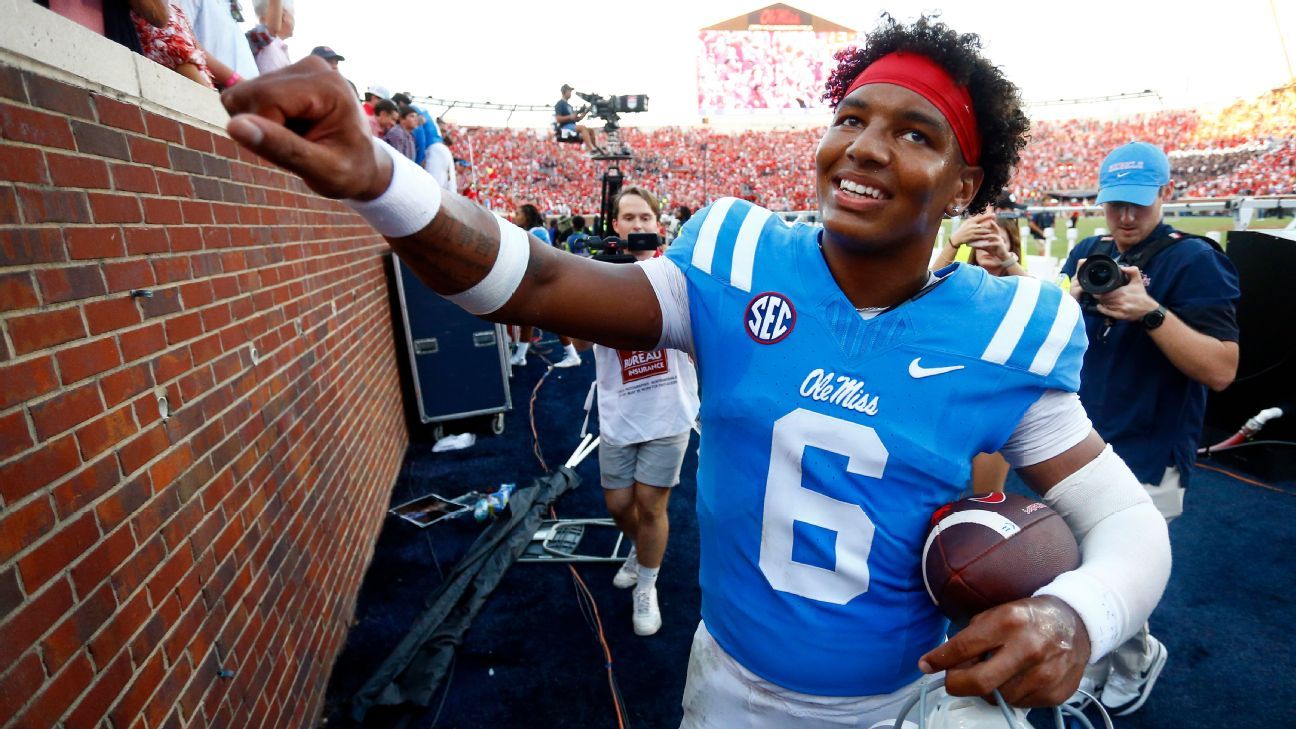
Kenyon Sadiq
Mason Taylor
Elijah Arroyo
Harold Fannin Jr.
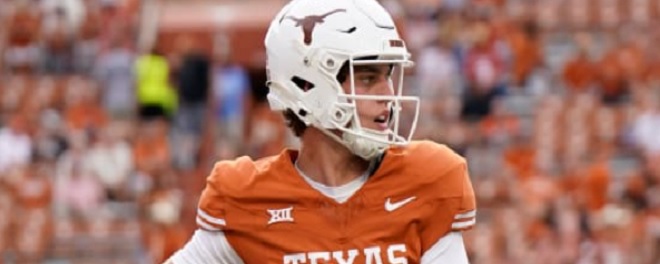
Sam Roush
Oscar Delp
Michael Trigg
Joe Royer
Just to be clear, this article and series are all my opinion. I base my evaluation on my own film study and also on information I've gotten from general managers, directors of college scouting, national scouts, area scouts, and NFL coaches who know way more than I do.
The 2025 NFL Draft was a superb year for tight ends. While 2026 does have as much first-round talent, it is a very deep class with good tight ends for day two and the mid-rounds.
If you were to merge the two classes, Kenyon Sadiq would be behind Colston Loveland and Tyler Warren, but he would be ahead of Mason Taylor. Sam Roush, Oscar Delp, Michael Trigg, and Joe Royer would be behind Harold Fannin Jr.
Safest Pick: Kenyon Sadiq, Oregon 
Previous Picks:2025 Colston Loveland
2024 Brock Bowers
2023 Sam LaPorta
2022 Trey McBride
2021 Kyle Pitts
2020 Adam Trautman
2019 T.J. Hockenson
2018 Hayden Hurst
2017 O.J. Howard
2016 Hunter Henry
2015 Clive Walford
2014 Eric Ebron
2013 Zach Ertz
Sadiq is a safe bet to be a very good starting tight end. Sadiq is a dangerous receiver, a mismatch weapon, and a playmaker in the passing game. He also blocks hard and really competes as a blocker. Sadiq looks like a safe pick to be a very good pro starter.
Biggest Bust Potential: Max Klare, Ohio State 
Previous Picks:2025 Harold Fannin
2024 Brevyn Spann-Ford
2023 Will Mallory
2022 Grant Calcaterra
2021 Hunter Long
2020 Hunter Bryant
2019 Noah Fant
2018 Jordan Akins
2017 Adam Shaheen
2016 Nick Vannett
2015 Nick O'Leary
2014 Jace Amaro
2013 Gavin Escobar
This was a tough call as none really stood out to me. However, I was disappointed with Klare last year at Ohio State. He had some dropped passes and did not seem as dynamic a receiver or blocker. He could get overdrafted and disappoint.
Tight End Rankings by Attributes
Pass Receiving:
NFL prototype: Brock Bowers, Raiders
- Kenyon Sadiq
- Michael Trigg
- Oscar Delp
- Sam Roush
- Joe Royer
Recap: The NFL has evolved to the point where tight ends are a critical part to a potent passing attack. Some teams have better receiving weapons at tight end than they do at receiver. The league is driven by passing, so if a tight end can't contribute as a receiver, he could have a hard time seeing the field. This draft class has some excellent receiving tight ends for the NFL.
As a receiver, Sadiq is a mismatch asset for his offense. He is a fast route runner with fluid athleticism to get open in the middle of the field. Sadiq has the speed to get down the seam and accelerate to find soft spots in zone coverage. With excellent body control and agility, Sadiq makes difficult catches using his body to box out defensive backs and make leaping grabs over them. Sadiq is a true mismatch weapon as he is too fast and athletic for linebackers; he will burn them in man coverage. Sadiq is also too big for defensive backs with his ability to make catches over them. Sadiq is a dangerous run-after-the-catch tight end as well, with good moves to dodge tacklers along with size to finish his plays well.
Trigg has the potential to be a mismatch receiving tight end with quickness, athleticism, and feel. Trigg is smooth as a route runner, and linebackers can struggle to run with him. He tracks the ball well downfield, has excellent ball-adjustment skills, and shows late hands to make the catch even when defenders are close. With his quickness and athleticism, Trigg is dangerous to rip off more yardage after the catch with the ball in his hands. Trigg shows toughness as a runner, as he won’t go down without a fight, and he has some elusiveness to juke defenders. Trigg has strong hands to snatch the ball out of the air and presents a good target for his quarterback. Trigg has some natural receiving ability, and he could be a good contributor to an NFL passing attack. His route-running is raw and could use some refinement, but the talent is there for him to be a dangerous receiving weapon.
Delp has the potential to contribute as a receiving tight end with the skill set to develop into a starter. Delp is an athletic and quick tight end who can challenge defenses down the middle seam or along the sideline. He has the speed and fluidity as a route-runner to create separation and is a natural hands catcher. With a burst in the second level, Delp can accelerate away from defenders and is a threat to create some chunk gains. Delp could stand to get more elusive as a runner and use his size to power through defensive backs. With his receiving ability, Delp could be a nice contributor as an F tight end for a pro offense.
As a receiver, Roush is a big target with enough functional speed and athleticism to be dangerous against zone coverage. Roush presents a big target going down the seam and running passes to the flat or along the sideline. Roush runs quality routes and has reliable, strong hands with a natural ability to snatch the ball. Roush is dangerous after the catch, showing a surprising burst to dart downfield after he makes a catch. Roush uses his big body to bounce off tacklers, and he shows a knack for ripping off good gains after making a reception. Roush does not have the speed and athleticism to separate from adept pro linebackers or safeties in pass coverage, but he has the size to win 50-50 and contested catches. Roush is not a dynamic receiving threat, but he could be a functional and good contributor to the pass game.
In the passing game, Royer is not overly fast or athletic, but he is a solid backup-caliber tight end who could be thrown the ball some, as defenses will probably not devote much attention to his direction. With nice technique, Royer is a solid route runner who does not take extra steps. He presents a big target and can high point the ball. While Royer is not an elite receiving option, he has the ability to contribute as a receiver in the NFL.
Blocking:
NFL prototype: George Kittle, 49ers
- Sam Roush
- Kenyon Sadiq
- Joe Royer
- Oscar Delp
- Michael Trigg
Recap: Blocking ability is still important for NFL tight ends, Not just in the ground game, but in pass protection. Teams like their tight ends to have the ability to help tackles when they're going against an elite edge-rusher and contribute to helping cover up tacklers in the rushing attack. To be a good well-rounded starting tight end in the NFL, you have to be able to pass protect and block the c-gap in the ground game.
Many tight end prospects are finesse receiving tight ends who struggle to block, but Roush is big, strong, and valuable to contribute as a blocker. He is strong at the point of attack and shows the ability to seal rush lanes from edge defenders and linebackers. All good tight ends have to be able to block the C-Gap and pass protect. Roush shows that ability with the size to tie up edge rushers and is capable of handling the C-Gap with his ability to tie up and block in the ground game, pushing straight ahead next to the tackle. Roush should be an asset as a blocker as a pro.
As a blocker, Sadiq is better than one would think from the eyeball test. Many receiving tight ends don’t like blocking, but Sadiq blocks his tail off. He will fight, hit, and scrap with defenders through the whistle. He will look to finish defenders when given the chance. Many pro coaches just want their tight ends to give an effort and get a draw, and Sadiq can do that. A tight end has to be able to help in pass protection and block the c-gap to be a true three-down starter, and Sadiq has the ability to do it. Given his size, he will always have some limitations taking on NFL defensive ends, but Sadiq fights hard, and that’s half the battle for a tight end.
As a blocker, Royer has room for improvement for the NFL, but the skill set is there to be a good blocker in time. Royer has good size and strength to be a blocker. His technique needs improvement, but he has the potential to be a solid Y tight end.
Delp is a willing blocker, and he competes. Many tight ends don’t give a good effort as blockers, but Delp does. He fights and battles, but does need to get stronger for blocking pro edge defenders and linebackers. Delp has potential, but needs more power and development to be reliable as a pass protector and blocking the C-gap.
As a blocker, Trigg is going to need development as a blocker to become a true three-down starter in the NFL. While he needs to be coached up, Trigg also has some size limitations. Trigg is going to need to get stronger and show that he can be relied on to pass protect and block the C-gap to be a three-down starter.
Red Zone:
NFL prototype: Sam LaPorta, Lions
- Kenyon Sadiq
- Sam Roush
- Joe Royer
- Oscar Delp
- Michael Trigg
Recap: Tight ends are critical players in the red zone. Multiple tight ends are needed for goal-line packages. Many teams also like to use double-tight end sets inside the 20-yard line. A tight end who is a big target with sure hands and leaping ability is a good weapon to help produce touchdowns instead of field goals. Also, being an effective blocker is very helpful in the condensed field, short yardage situations, and goal line. Tight ends that are terrible blockers aren’t options for goal-line packages.
Sadiq is the best red zone weapon in this group because of his receiving ability, his route running to get open, his size to make contested catches, run after the catch ability, and because he is capable of splitting out and beating man coverage as a receiver.
Roush is a close second because not only was he a good red zone contributor as a receiver, but he also blocks well enough to keep defenses guessing on what he might do on any given play. Royer and Delp are potential red zone weapons with their ability to contribute as receivers and blockers. Trigg made some plays in the red zone last year, showing versatility, but he has limitations as a blocker that could get him pulled out of the game at the goal line.
Hands:
NFL prototype: George Kittle, 49ers
- Kenyon Sadiq
- Sam Roush
- Joe Royer
- Oscar Delp
- Michael Trigg
Recap: Tight ends with bad hands don't get thrown the ball often in the NFL. They have a hard time seeing the field and end up only playing in goal-line situations and on special teams. In the group above, there wasn’t one player that stood out as having bad hands.
Sadiq and Roush have the best hands of this group and are natural hands catchers. Royer has really soft hands and is a natural receiver. Delp and Trigg have reliable hands overall, but they can have an occasional drop.
Yards After the Catch:
NFL prototype: Brock Bowers, Raiders
- Kenyon Sadiq
- Sam Roush
- Oscar Delp
- Michael Trigg
- Joe Royer
Recap: There are some tight ends in the NFL who are very dangerous with the ball in their hands. Having the ability to pick up yards after the catch (YAC) is not an easy trait to find in tight ends. This class has some quality yards after the catch tight ends, and none of the five is bad at it.
With his speed, athleticism, and strength, Sadiq is dangerous after the catch to rip off yards and turn routine catches into big plays. Roush and Delp had some excellent runs after the catch in their careers, and they could translate that to the NFL. Trigg flashes some run-after-the-catch ability, and he made some big plays for Baylor last season. Royer was okay for college, but may not offer much run-after-the-catch ability in the NFL.
 Walt
Walt