 Walt
Walt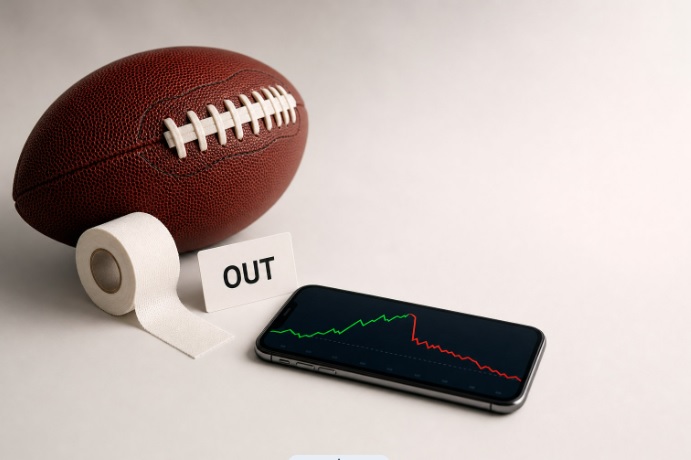
Injury news in the NFL can transform expectations for games within minutes, affecting analysis, strategy, and market decisions alike. The rapid spread of updates during preseason and the regular season creates a dynamic landscape in which both teams and observers must constantly adapt. Understanding the true impact of specific injuries provides crucial insight into how football analysis and market expectations shift almost instantly.
The latest reports surrounding active player status are often the fastest-moving variable in professional football, shaping analysis and fan conversations each week. NFL betting odds are updated regularly to reflect changes in player availability, team adjustments, and injury information. Readers visiting this source will find current odds and market updates for NFL games, which are influenced by evolving injury news, roster changes, and other relevant factors. The reaction to injury information does not always match the reality on the field, as the public and markets sometimes struggle to gauge the true difference an absence makes. This gap between expectation and actual impact is what drives re-evaluation throughout the week and can alter strategies from both coaching staff and those assessing upcoming games.
Why not all injuries shift expectations equally
Not every injury has the same influence on outcomes or analysis, with position and context heavily shaping the expected shift. For example, the absence of a starting quarterback almost always draws significant attention from analysts and oddsmakers alike, as the position is central to offensive production and on-field decision making.
In contrast, high-profile running backs or receivers may miss a game with less visible change to a team’s projected output, except when their particular skill set is hard to replace. Offensive line injuries, especially when several starters are out, can have a cascading effect on the offense, exposing quarterbacks to greater pressure or disrupting rushing lanes. Meanwhile, a thin position group, such as cornerbacks in coverage-heavy defensive schemes, can leave units vulnerable even if the individual missing is not widely recognized.
The phrase “next man up” is often echoed in NFL locker rooms, but its validity depends on roster depth and specific skill sets lost. Coverage units built around elite corners or offensive schemes founded on precise timing cannot always compensate for absences, and the public often overestimates a team’s ability to simply plug in a new player without significant adjustment.
Understanding the flow of injury information each week
Injury news rarely presents clarity from the moment it breaks. Initial reports, often based on practice participation or insider knowledge, may lack detail or context and require careful interpretation as information evolves throughout the week. Monday and Tuesday updates can be particularly noisy, as teams may use gamesmanship and attempt to conceal their true situation from both opponents and the broader public.
By Thursday and Friday, practice participation and official designations such as questionable or doubtful bring increasing clarity. Even then, teams sometimes leave final decisions until the list of game-day actives is released shortly before kickoff. Official injury designations can influence both internal strategy and external expectations for how a game will unfold.
This shifting timeline requires careful attention and a disciplined approach to monitoring updates. Analysts who react too quickly to incomplete or speculative reports may misjudge a matchup. Waiting for official confirmation reduces risk but can result in missing early market adjustments that occur when information first becomes public.
Team adjustments: Tactical responses and new game plans
Coaching staff must adapt their weekly strategy when key players become unavailable, with certain changes often emerging immediately. Offensively, teams tend to modify play-calling to protect backup quarterbacks or compensate for missing linemen. This may include shorter passing concepts, more frequent max protection, or additional use of screen plays to reduce pass rush pressure.
Defensive adjustments can be equally complex, especially if a coverage specialist or leading tackler is missing. Teams may alter coverage shells, shift substitution patterns to bring in extra defensive backs, or change blitz frequency to mask weaknesses in the secondary or at linebacker. These shifts can affect how a contest unfolds, changing everything from expected points to the rhythm and tempo both teams can establish.
Target distribution often expands as well, with previously lower-profile weapons becoming focal points in the absence of star skill players. Tempo changes, such as slowing the pace to protect an overmatched offensive line, are common. Each of these tactical responses connects to downstream effects measured by analysts and market participants.
Re-evaluating matchups and interpreting market reactions
Serious evaluation after injury news hinges on more than the headline absence. Analysts rebuild their previews with close attention to where the game will be won or lost, especially in the trenches, where mismatches between offensive and defensive lines become most pronounced with key absences.
Public betting trends often reflect name-value bias, where a well-known player’s injury produces dramatic reactions in NFL betting odds, even if their calculated effect on point differential is smaller. Brief market inefficiencies can occur following high-profile injuries, particularly after nationally televised games when public perception may intensify market movement.
It is important to consider not only single star losses but also cumulative attrition, such as multiple injuries within a single unit. Often, several lesser-known players missing from an offensive or defensive line have a deeper effect on expected scoring environments than a single star at a different position. Late-week expectations can shift more accurately as the true scope of absences becomes clear, making thorough re-evaluation essential for informed analysis.
Responsible tracking of information and disciplined analysis
Responsible assessment of injury situations requires separating fact from speculation. Using tiered sources, such as official practice reports, coach interviews, and input from respected beat writers, helps ensure analysis is built on credible evidence rather than rumors that circulate early in the week.
Market participants and analysts benefit from understanding the hierarchy of injury reporting. Early information can move sentiment but may not withstand scrutiny once official team designations are announced. Building habits around verifying updates before adjusting evaluations helps prevent overreactions and supports consistent decision making.
Injuries remind NFL analysts that all forecasts are conditional, reliant on consistent, up-to-date information. Maintaining a disciplined approach to re-evaluating games when news breaks helps ensure that expectations reflect reality rather than headlines. This approach can improve evaluation consistency compared to reactions based entirely on early reports or speculation.
 Charlie Campbell