
 Charlie Campbell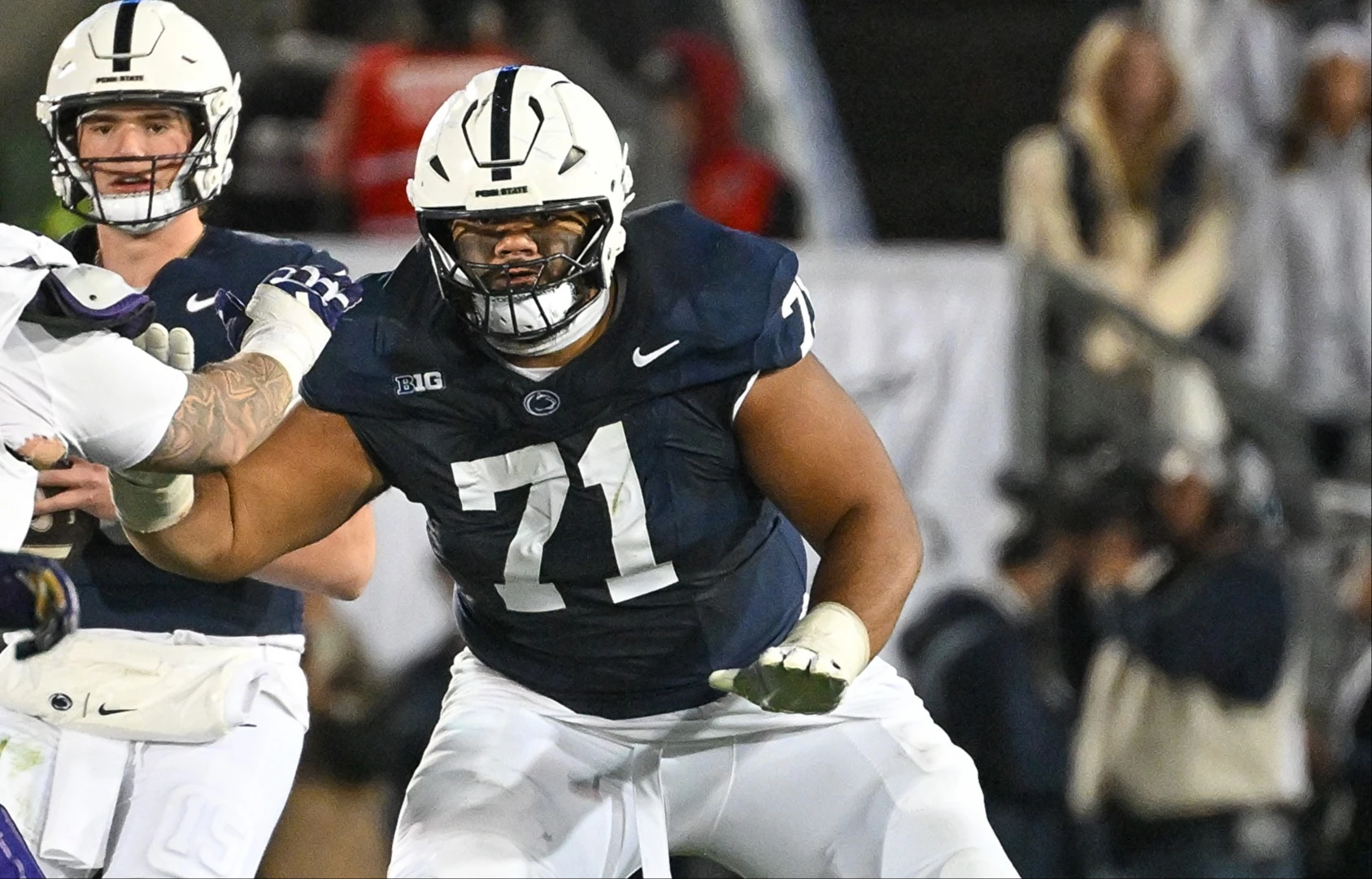
Interior Offensive Lineman Class
Early-round talent: B+Mid-round: B
Late-round: B-
Overall grade: B
Merging the 2025 and 2026 prospects
Tyler BookerGrey Zabel
Vega Ioane
Donovan Jackson
Jonah Savaiinaea
Jake Slaughter
Gennings Dunker
Emmanuel Pregnon
Chase Bisontis
Anthony Belton
Just to be clear, this article and series are all my opinion. I base my evaluation on my own film study and also on information I've gotten from general managers, directors of college scouting, national scouts, area scouts, and NFL coaches who know way more than I do.
If you were to merge the two classes together, Tyler Booker would be the best prospect, and it isn’t all that close. However, Grey Zabel and Vega Ioane are very good prospects and worthy of being top-20 picks. Donovan Jackson is behind Ioane. Jonah Savaiinaea is slightly ahead of 2026 second-round caliber players like Jake Slaughter, Gennings Dunker, Emmanuel Pregnon, and Chase Bisontis. Anthony Belton is a little behind that 2026 group.
Safest Pick: Vega Ioane, Penn State 
Previous Picks:2025 Tyler Booker
2024 Jackson Powers-Johnson
2023 Peter Skoronski
2022 Kenyon Green
2021 Alijah Vera-Tucker
2020 Tristan Wirfs, Cesar Ruiz
2019 Cody Ford, Eric McCoy
2018 Quinton Nelson, Billy Price
2017 Forrest Lamp
2016 Sebastian Tretola, Nick Martin
2015 Brandon Scherff, Cam Erving
2014 Xavier Sua'Filo, Weston Richburg
2013 Chance Warmack, Barrett Jones
This was an easy choice as Ioane is one of the safest prospects in the 2026 NFL Draft. With his power, size, and athletic ability, it would be shocking if he didn’t turn into a good NFL starter.
Biggest Bust Potential: Keylan Rutledge, Georgia Tech 
Previous Picks:2025 Tate Ratledge
2024 Beaux Limmer
2023 Broderick Jones
2022 Thayor Munford
2021 Trey Hill
2020 Damien Lewis, Jake Hanson
2019 Ross Pierschbacher
2018 Scott Quessenberry
2017 Pat Elflein
2016 Cody Whitehair, Jack Allen
2015 Jeremiah Poutasi, Hroniss Grasu
2014 Chris Watt, Marcus Martin
2013 Brian Winters, Travis Fredrick
Rutledge could easily go in the second round based on what I have heard from team sources and media reports. However, some teams have Rutledge graded much lower because of concerns about his ability to protect the quarterback and handle speed rushers. Rutledge is a strong and physical run blocker, but he could be overdrafted and forced onto the field too soon as an early-round pick.
Interior Offensive Lineman Rankings by Attributes
Pass Protection:
NFL prototype: Joe Thuney, Bears
- Vega Ioane
- Emmanuel Pregnon
- Gennings Dunker
- Jake Slaughter
- Chase Bisontis
Recap: The NFL is a passing-driven league, so keeping a clean pocket as a pass-blocker is the attribute that the majority of teams consider first. Coaches want the guards to keep defensive tackles from gaining penetration or causing disruption. If the guards are successful, quarterbacks can step up in the pocket to avoid edge-rushers. This helps out the offensive tackles significantly. Plus, good guard/center play provides better throwing lanes for the quarterback.
In pass protection, Ioane has a strong anchor and can stand up bull rushers with ease. Ioane uses his strong hands and big mass to sustain blocks well. His power helps him to recover by jarring defenders off their rush, allowing Ioane to regroup and tie them up. Fast interior defensive tackles or defensive ends that move inside in passing situations could give Ioane problems early in his NFL career, but over time, he should be a steady pass protector.
In the passing-driven NFL, Pregnon has a good skill set to take on interior rushers. He has the size, strength in his base, and ability to sink his weight to stonewall bull rushers. Pregnon shows a good ability to anchor and withstand a bull rush when blitzers have more space to attack him with speed to power. While Pregnon is not an elite interior athlete, he has the quickness and athleticism to match up against speed rushers. Pregnon could stand to improve his pass protection when he is attacked with counters, but he should turn into a steady and reliable protector as a pro.
While Dunker started at right tackle for Iowa, his best fit in the NFL would come inside at guard. In pass protection, Dunker could have issues with pro speed rushers on the edge, but his skill set should make him a rock-solid pass blocker inside at guard. His arms are a little short, but his feet and kick slide look better suited to line up inside. His hand placement also needs some development, but Dunker has a strong base to hold his ground against bull rushes. He should be able to handle power nose tackles as well as quick interior pass rushers if he were to line up at guard.
As a pass blocker, Slaughter is polished and reliable to keep his defender from getting heat on the quarterback. He is smart and adjusts well to games or stunts. Slaughter does a quality job of riding defenders around the pocket when they try to beat him with speed. In the NFL, interior speed rushers could give him some issues, as Slaughter does not have special athleticism and does not stand out for having quick feet.
Bisontis was a quality pass protector during his collegiate career. He uses his strength and balance to sustain blocks to neutralize second efforts. With enough athleticism and quickness, he can mirror speed rushers, and he has the strength to anchor. He could use development with handling counter moves and getting in a better position to not allow rushers to get on his edges. Bisontis has short arms that have some limitations for him to work through as well.
Run Blocking:
NFL prototype: Quenton Nelson, Colts
- Vega Ioane
- Gennings Dunker
- Chase Bisontis
- Emmanuel Pregnon
- Jake Slaughter
Recap: The interior of the offensive line is the engine of a good running game. They are the most important blockers for opening holes up the middle in addition to pulling or moving on stretch runs. Dominant guards and centers who can open up holes even when defenses know the run is coming provide a mental edge, especially late in games. This is a pretty good class of run blockers, and in this group of five, I don’t think there is a bad run blocker.
As a run blocker, Ioane has heavy hands with sheer power at the point of attack to generate movement. Ioane can latch onto defensive tackles and use his strength to manipulate them out of their gap. Finding nasty bullies up front is getting more difficult as the uptempo and spread offense has changed the game, and Ioane is a rare college blocker who enters the NFL with a mean streak to set a physical tone at the point of attack. Ioane blocks through the whistle, pushes defenders around, buries them into the ground, and finishes them off with violence. Ioane has developed strength to push defenders out of their gap and open holes in the ground game. Ioane is going to be a load as a run blocker and a real asset in short-yardage or goal-line situations, as his team should have a lot of success running behind him. As a pro, Ioane should be a real asset as a run blocker in a power man scheme. Ioane is not super athletic or fast to cover a lot of space. He is a better fit in a power man scheme versus a zone blocking scheme.
As a run blocker, Dunker is absolutely tenacious with some serious heavy hands. He blocks hard through the whistle and looks to really punish defenders. Dunker charges hard and pulls well to hit kick out blocks, and when he gets to linebackers or defensive backs, he brings serious physicality. Dunker will rock them with some bone-rattling hits and sheer violence. Dunker is strong at the point of attack, and he fires into the chest of defensive linemen. With his size and strength, Dunker can generate a push as a run blocker. He also functions well on zone runs, and moving to the inside will make him even better.
In the ground game, Bisontis has good size and strength to tie up defenders. He has the size and power to drive block and will push defenders out of their gap. Off the snap, Bisontis is physical and nasty; he projects to have power run-blocking potential. Bisontis is agile and athletic enough as a blocker who is very good at pulling or moving in space on zone stretch runs. As an interior run blocker, Bisontis can fit into a zone or power man scheme.
In the ground game, Pregnon is a solid contributor. He packs a punch off the ball and looks to blast defenders off the line. He has some punch to create movement and is adept at combo blocks with good leverage to execute bump blocks with his center. Pregnon has quality hand placement and strength to engage defenders. Pregnon has average range and can execute zone blocking or power man plays.
In the ground game, Slaughter can generate some movement at the point of attack. He is strong and fires off the ball. With heavy hands and upper body strength, Slaughter can push defenders backwards and generate some movement at the point of attack. He torques and manipulates defenders to get some openings for his back. He can also get to blocks on linebackers and does a nice job of riding them out of a play when he gets a hold of them.
Zone Blocking:
NFL prototype: Landon Dickerson, Eagles
- Gennings Dunker
- Vega Ioane
- Emmanuel Pregnon
- Jake Slaughter
- Chase Bisontis
Recap: The zone-blocking system is run by a number of NFL teams, and the success of the scheme has many power-man teams adding some zone plays into the playbook. The zone scheme calls for guards and centers to have the ability to move well laterally and downfield to help set up a moving wall with cut-back lanes. Interior linemen need athleticism and quickness in order to be effective.
Dunker has enough quickness and athleticism to get consideration at right tackle, and that translates well for him to be a zone blocker at guard. Ioane and Pregnon also move well to function in zone. Slaughter was a quality zone blocker in college. Bisontis can do zone plays, but might be a more natural fit in a power man scheme.
Power Man:
NFL prototype: Chris Lindstrom, Falcons
- Vega Ioane
- Gennings Dunker
- Emmanuel Pregnon
- Chase Bisontis
- Jake Slaughter
Recap: A lot of teams in the NFL run a power man-blocking scheme. Interior linemen for this scheme need the ability to defeat their defender to blast open or seal a running lane. Guards need to have the power to move defenders and sustain blocks, while centers need to be able to contribute in some one-on-ones and execute well on double teams with their guards.
In the ground game, Ioane is a force at the point of attack that has strong hands and the power to be a drive blocker. With tenacity, Ioane can shock defenders back and drive them out of their gap. Dunker, Pregnon, and Bisontis have the power to knock defenders back and generate movement at the point of attack. Slaughter can operate in a man scheme, but he is better executing combo blocks with guards rather than taking on heavy nose tackles on his own.
Versatility:
NFL prototype: Elgton Jenkins, Packers
- Gennings Dunker
- Jake Slaughter
- Vega Ioane
- Emmanuel Pregnon
- Chase Bisontis
Recap: A lot of NFL offensive line coaches want to cross-train their interior linemen for another position, especially among the backup offensive linemen. It helps teams in making the decision on who to keep active on game days. Linemen who can play more than one position are highly valued. Coaches like guards who can play center or tackle if there is an injury in the middle of a game.
Dunker is the most versatile of the group, as he could be a starting guard or tackle in the NFL. He looks like he would be the most dominant playing inside, but he could be tried at right tackle. Slaughter could play center or guard in the NFL, but center could be where he is at his best and most effective. Ioane, Pregnon, and Bistontis are pure guards in the NFL and don’t look like players that should be tried at tackle or center.
 Walt
Walt