
 Walt
Walt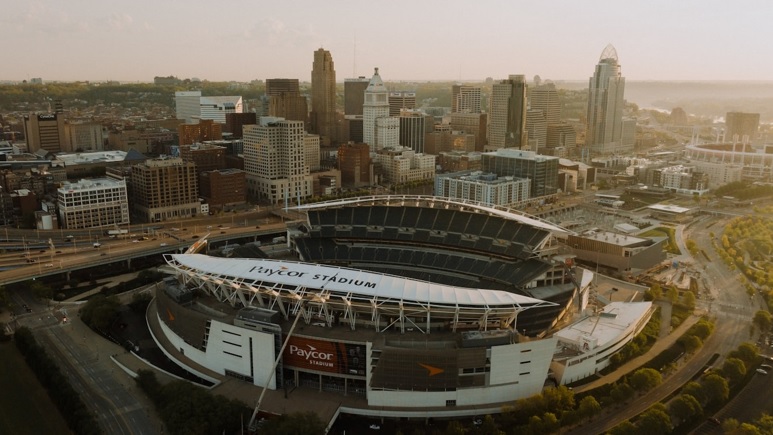
The Bengals started the 2025 season 2-0 — the best opening of the Zac Taylor era. Things were finally supposed to be different after back-to-back playoff misses initiated by 0-2 starts. Then Joe Burrow went down yet again, and Cincy went 1-8 without its talisman, and by the time he limped back onto the field in late November, the playoff picture already looked well out of reach.
Joe Flacco, brought in to take over from the disaster that was Jake Browning under center, produced genuinely elite quarterback numbers in relief. It didn't matter. When your defense is allowing 31.6 points and 407 yards per game — historically, statistically, embarrassingly the worst unit in football — elite quarterback play is just a prettier tombstone. That was 2025. That was also 2024. And 2023.
Three consecutive years of a generational offense being consumed by a defense that was, every single week, the worst thing happening in professional football. The window isn't closed. But it has been left open in a hurricane for three straight seasons. This offseason, someone finally shut it — and rebuilt the frame while they were at it. Online betting sites seem to have gotten the memo.
A few weeks ago, the bookies made the Bengals a +3300 fringe contender. Then, draft week came and went, and now popular Sportaza online sportsbook has slashed odds on a maiden Cincinnati Lombardi down to +2000. So, what's the reason for the dramatic odds change? Well, here are three reasons why you shouldn't sleep on Joey B and Who Dey Nation in 2026.
Defensive Overhaul
Lou Anarumo got fired after 2024 because the defense was bad enough to warrant it. His unit finished 25th in overall defensive rankings — and this was the year Burrow threw for a league-leading 4,918 yards, 43 touchdowns, and posted a 108.5 passer rating on his way to a second Comeback Player of the Year award. One of the ten greatest quarterback statistical seasons in NFL history still culminated in a third consecutive playoff miss.
In 2025 came the nadir — 31.6 points per game, 407-plus yards surrendered every week, statistically challenging post-merger records for futility, seven of the first eight games bleeding 27-plus points representing a very real structural emergency.
GM Duke Tobin's response was to surrender the 10th overall pick to the Giants — elite draft capital, the kind of asset franchises typically hoard — to acquire Dexter Lawrence. Think about what that decision actually represents: a front office finally acknowledging that spending first-round capital to patch a catastrophic defensive front hurt less than watching another Burrow season evaporate behind it. And that was the cherry on top of an already tasty-looking cake to begin with.
Edge rusher Boye Mafe arrived on a three-year, $60 million deal, fresh off winning a Super Bowl with Seattle, a player who changes third-down calculations for every offensive coordinator who draws up a game plan against Cincinnati. Veteran defensive tackle Jonathan Allen added the interior toughness and intelligence that no dollar figure can manufacture from scratch. Safety Bryan Cook signed a three-year, $42.5 million deal from Kansas City — a Super Bowl champion who understands what a winning defensive infrastructure actually feels like from the inside. The draft added edge rusher Cashius Howell in the second round at Pick 41 out of Texas A&M, and cornerback Tacario Davis in the third round at Pick 72 out of Washington.
Read the defensive front now: Mafe, Lawrence, Allen, Myles Murphy. Lawrence anchors the interior, collapsing the pocket from inside, making everything around him more dangerous. Mafe off the edge forces offensive coordinators into extra protection, which opens the run game and the play-action game that Burrow operates better than almost anyone alive. Cook's range over the deep middle changes how safeties are deployed against this defense — suddenly, offenses can't exploit the two-deep breakdowns that hemorrhaged points throughout 2023, 2024, and 2025.
Here's the parallel worth drawing — and drawing properly. The 2021 offseason rebuilt an offensive line that had been the franchise's most persistent weakness, and it sent Cincinnati to the Super Bowl. This offseason rebuilt a defensive front that was the franchise's most persistent weakness. Same structural logic. Same franchise. Different side of the ball. The stakes are identical.
The Offense Remains Elite
33-17. That is the most important number in this entire article. Thirty-three wins, seventeen losses — the Bengals' record when Burrow, Ja'Marr Chase, and Tee Higgins are all healthy and active together. That is a championship pace. That is a number that tells you, with complete clarity, that this trio does not need saving. It needs protecting.
Burrow was the first overall pick in 2020. In his rookie year, before he'd started twenty NFL games, he tore his ACL, MCL, PCL, and partially his meniscus — the kind of injury that ends careers and haunts organizations for a decade. He came back. Won Comeback Player of the Year. Led Cincinnati to its first Super Bowl in 33 years. Dislocated a finger. Sprained his MCL in the Super Bowl itself. Came back. Reached an AFC Championship Game in 2022. Tore his wrist ligament in 2023. Came back and threw for 4,918 yards and 43 touchdowns in 2024 — a second Comeback Player of the Year. Six significant injuries since being drafted. Six times, the same answer: get back up and produce at an elite level.
Ja'Marr Chase is arguably the best receiver in football right now — Pro Bowl in each of his first four seasons, one of six players in league history with four consecutive 1,000-yard receiving seasons, and the 2024 receiving Triple Crown: 127 receptions, 1,708 yards, 17 touchdowns, leading the NFL in all three. In a lost 2025 season, he still caught 125 passes for 1,412 yards. Tee Higgins has cracked 900 receiving yards in four of his five NFL seasons, including 1,091 in 2021, 1,029 in 2022, and two touchdown catches in Super Bowl LVI.
The specific cruelty of these past three years is that this trio was elite throughout every single one of them. The defense destroyed what this offense deserved. With that rebuilt, all the offense needs to do is continue at the same rate, and success will surely head to Paycor Stadium.
The Line Nobody Wants to Admit Is Good
A decade of bad offensive lines cast a shadow that stubbornly refused to lift — even after the evidence stopped supporting it. In 2025, Pro Football Sports Network ranked Cincinnati's offensive line seventh overall in the NFL, with a collective grade of 79.7. Ninth in sack percentage. Thirty-six sacks allowed on a 5.3% rate.
Orlando Brown Jr. posted an 85.9 PFF pass-blocking grade — evidence, specific and numerical, that the blindside Burrow plants his feet behind is one of the better ones in the AFC. Cody Fairchild graded out at 84.9. Amarius Mims took significant developmental strides in his first full NFL season. Ted Karras provided the intelligence at center that allows an offensive line to function as a single organism, rather than five individuals reacting independently.
All five primary starters return in 2026. Continuity and chemistry already established; no re-learning required. The rivals still pointing at Cincinnati's offensive line as the exploitable weakness are pointing at a ghost from yesteryear.
 Charlie Campbell