
 Walt
Walt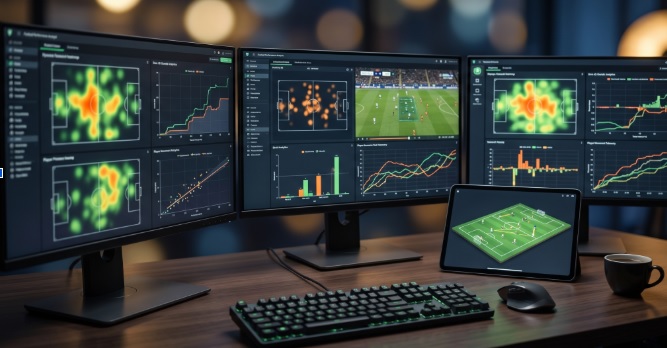
The evolution of modern football analytics has fundamentally altered how coaches, scouts, performance directors, and global fans analyze the beautiful game. Moving far beyond traditional box-score metrics like possession percentages and total shots, contemporary football telemetry leverages high-frequency optical tracking systems, computer vision algorithms, and predictive data models. Today, every player movement, pass trajectory, defensive block, and pressing trigger is recorded and evaluated in real time to deliver unprecedented insights into tactical team dynamics.
Building a scalable digital infrastructure capable of processing high-volume live match feeds requires an integrated framework of low-latency API networks, event-driven data streaming, and high-concurrency web engines.
[file-tag: code-generated-file-football_telemetry_pure_sports.png]
High-Frequency Match Telemetry and Machine Learning Analytics
Delivering live match analytics to millions of sports enthusiasts simultaneously demands sophisticated data ingestion pipelines. Optical tracking cameras positioned around stadium roofs capture positional coordinates at up to 25 frames per second, creating vast streams of spatial data that must be aggregated without processing delays.
Key technical components of modern football analytics systems include:
- Expected Goals (xG) and Expected Assists (xA) Modeling: Evaluating shot quality and pass lethality by calculating spatial distance, defender proximity, shot angle, and body positioning in real time.
- Off-Ball Movement Vectors & Pressing Efficiency: Quantifying defensive pressure, team shape compactness, and passing lane disruption through spatial geometric algorithms.
- Real-Time Data Ingestion Pipelines (Kafka/RabbitMQ): Buffering incoming sensor feeds and match events during high-profile international matches to prevent database bottlenecks.
- Low-Latency WebSocket Streaming: Pushing instantaneous match notifications, live tactical heatmaps, and statistical updates directly to user interfaces without manual page refreshes.
Fan Engagement and Dynamic Interface Optimization
The modern football viewer demands a personalized and interactive digital experience. Whether following live match centers, analyzing post-match heatmaps, or interacting with digital sports media, users expect instantaneous interface responsiveness across mobile and desktop applications.
Crucial engineering practices for high-traffic sports portals include:
- Micro-Frontend UI Architecture: Decoupling sports web portals into autonomous interface modules to ensure live scoreboards load independently from heavy video and commentary feeds.
- Edge-Driven Static Content Caching: Distributing static media assets, player profiles, and team statistics across global CDN edge nodes to minimize latency for international audiences.
- Asynchronous Hydration & Responsive UI: Prioritizing core match telemetry rendering before hydrating secondary stats, keeping mobile applications fast and responsive during live games.
Digital Entertainment Systems and High-Availability Infrastructure
The architectural standards designed for processing high-volume football telemetry are equally vital across the broader digital entertainment sector. Modern online platforms must maintain uninterrupted uptime, sub-second latency, and robust encryption to ensure user satisfaction during peak traffic events.
These advanced high-performance frameworks power modern digital platforms worldwide. For instance, when users navigate interactive digital portals or explore a dynamic crypto casino platform offering immersive gaming experiences and fast transaction processing, the underlying system operates on optimized edge routing and secure session handshakes. The seamless combination of low-latency data pipelines, TLS 1.3 transport security, and distributed server clusters guarantees that users enjoy smooth interface navigation and immediate responsiveness regardless of their device or location.
The Future Trajectory of Football Analytics and Media
As optical tracking and computer vision technologies continue to advance, the future of football analytics will be defined by automated tactical video generation, real-time biomechanical injury risk assessments, and HTTP/3 protocol adoption for mobile connectivity. Deep statistical modeling paired with resilient web infrastructure will continue to shape how football is understood, analyzed, and enjoyed on a global scale.

 Charlie Campbell