 Walt
Walt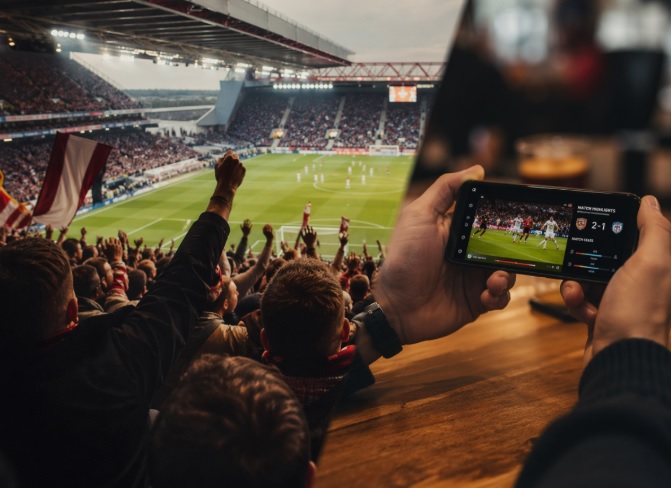
Football has long since ceased to be limited to the stadium and match day. In the past, everything revolved around the stands, live emotions, and the local atmosphere, but now that is only part of the overall experience. Today, fans live and breathe soccer every day – through social media, mobile apps, streaming, games, and other digital formats that keep the action going even after the final whistle.
How Broadcast Media Expanded the Fan Experience
The expansion of soccer’s audience began long before the digital era – with television. Before that, a match remained an event specific to a particular city, and radio transmitted only voices and emotions. Television broadcasts showed the entire game for the first time: tactics, movement without the ball, and the teams’ performance on the field.
With regular broadcasts of championships and tournaments, soccer became a global phenomenon. FIFA World Cup Finals drew massive audiences to their screens, and clubs began to gain recognition worldwide.
Cable channels amplified this effect. Not only matches appeared on the air, but also studio segments, analysis, and archives. Fans began to follow the team’s form, the coach’s decisions, and news surrounding the club. Players became global figures – the careers of Diego Maradona and David Beckham unfolded before the eyes of millions.
Sports media consumption also changed the viewing experience itself: replays, close-ups, and statistics. Attention to detail emerged, and with it, a deeper understanding of the game.
The Rise of Always-On Fan Interaction
The digital environment has shifted soccer into a state of constant presence. Official websites, mobile apps, and video platforms have turned the flow of information into a continuous stream. In the morning – the lineup at practice; in the afternoon – the coach’s comments; in the evening – pre-match statistics. Push notifications arrive immediately after major events, and live data is updated throughout the game, with details down to pressure zones and shot locations.
Clubs have established direct contact with their audience without intermediaries. Team accounts communicate daily: short videos from training sessions, clips from the locker room, and players’ reactions immediately after the final whistle. YouTube and official apps have cemented the habit of returning to soccer every day, while Fantasy Premier League formats have sustained interest throughout the entire season.
Social Media and Real-Time Community
Discussions about a match are no longer limited to the stadium or the TV. During the game, Twitter, Instagram, and TikTok feeds fill up with reactions seconds after a goal or a controversial play. On Reddit and fan forums, analyses, GIFs, and screenshots with replays appear.
Emotions are experienced collectively: thousands of people discuss the same moment in real time. Memes and short videos spread faster than official highlights, and behind-the-scenes clips – from locker-room celebrations to the reactions of substitutes – add an extra layer of perception. Transfers, refereeing decisions, and unexpected twists in the match instantly become topics of discussion, where the fan is not an observer but a participant.
Personalized Content for Modern Supporters
Digital services tailor the flow of information to the individual. A fan who follows Juventus sees exactly the news relevant to them in the app: the lineup, the coach’s interview, and player statistics. If interested in a specific player, the system shows their performance in the match, clips featuring them, and updates on their form.
Highlights are curated based on preferences, notifications are sent only for selected events, and recommendations are tailored to viewing history. As a result, digital sports engagement becomes targeted and fast: the information you need appears immediately, without searching or unnecessary content.
From Watching Football to Interacting With It
During the game, fans simultaneously participate in digital activities that complement what’s happening on the field. Surveys appear in official apps and on league platforms: choosing the best player, evaluating a controversial play, predicting the next goal. Responses are collected in real time and form an overall picture of the audience’s reaction.
Fantasy formats have reinforced the habit of paying attention to details. In the Fantasy Premier League, attention is divided among dozens of players: it matters who starts, who takes set pieces, and who finishes attacks most often. A single match begins to be viewed through the lens of several storylines at once, and interest in the round doesn’t wane even in the absence of a direct connection to a favorite club.
Platforms with advanced statistics display pass maps, pressure zones, and expected goals. Fans compare the numbers with what’s happening on the field, discussing the coach’s decisions and tactical adjustments as the match unfolds. Conversations about soccer shift from general impressions to specific plays and metrics.
Clubs add game mechanics on top of matches. Prediction services invite users to guess the score, the goal scorer, or the number of corner kicks. Correct answers earn points that can be exchanged for bonuses within the club’s ecosystem – ranging from digital badges to access to exclusive content. Internal challenges and quests keep fans engaged between games.
During the broadcast, fans comment on plays, share screenshots, debate the referee’s calls, and compare opinions with others. As a result, the match becomes a multi-layered event: the game unfolds on the field, while around it there is constant fan interaction, where everyone can influence the overall flow of reactions.
Why Digital Entertainment Now Matters to Football Audiences
Interest in soccer is no longer limited to watching matches and news. Fans seek to extend those emotions into other formats – places where they can still experience soccer fan engagement, a sense of competition, and a shared space with other participants. Digital entertainment in soccer fulfills this need: it allows fans to remain immersed in the sporting context even outside of game time.
Gaming, Interactivity, and New Attention Patterns
The boundaries between the soccer audience and users of digital entertainment are gradually blurring. Interest in games, predictions, and interactive football content is developing in parallel with interest in the sport itself. A fan can simultaneously follow the season, build a fantasy team, discuss tactics, and participate in game scenarios where reaction and contextual understanding are key.
Alongside fantasy sports, prediction-based experiences, and formats such as poker sweepstakes, many fans also engage with digital entertainment that extends the competitive and social aspects of sports culture beyond the match itself. Attention is divided among several activities. The same user easily switches between watching the match, discussing it in the community, and participating in interactive mechanics.
What Clubs, Leagues, and Media Brands Can Learn From This Shift
The social media and football audience moves between screens and formats during a single match, so content is structured as a system rather than individual posts. Broadcasts, mobile apps, social media, and short videos operate simultaneously. The second screen has become part of the football fan experience: fans watch the game while simultaneously reading reactions, watching replays, and checking statistics. In this environment, fast-paced formats are valued – clips featuring key moments and behind-the-scenes footage that appear almost immediately after the event.
Modern football fans often discover the game through short videos and interactive content. Clubs curate their content streams with this habit in mind: dynamic highlights, player reactions, and training clips. A key shift involves engaging with online football communities. Fans expect dialogue and participation: responses to comments, discussions, and involvement in football and streaming culture. Attention is maintained through frequent touchpoints throughout the week, where the rhythm of posts and a sense of presence matter more than just reach.
The Future of Fan Engagement in Football
The next stage of football fandom evolution is already taking shape at the intersection of data and personalization. Algorithms analyze football audience behavior – which matches they watch, which players they follow, which moments they rewatch – and use this to curate a personalized feed. Content adapts dynamically: some users see tactical breakdowns, others get short clips of key moments, and others receive statistics on specific plays on the field.
Artificial intelligence is also part of the future of football fandom. Automatic highlights are compiled immediately after the final whistle, voice assistants can recap the match in a minute, and visual models recreate plays from alternative angles. Fans get multiple ways to experience the same game – from a brief recap to a detailed analysis.
Broadcasts with the ability to switch cameras, augmented reality with statistics overlaid directly on the screen, and interactive replays where you can rewind a moment from any point – all of this is gradually moving beyond experimental formats. A smartphone or tablet becomes a second-screen football experience that complements the main broadcast.
At the same time, the stadium retains its significance. The atmosphere of the stands, the sound of live reactions, and the sense of the event’s scale cannot be fully transferred to the digital realm. But it is precisely the digital environment that increasingly determines how people experience their connection to soccer beyond those 90 minutes – through constant access to information, interactivity, and a personalized scenario for engaging with the game.