 Walt
Walt
Image by Maribel Okafor
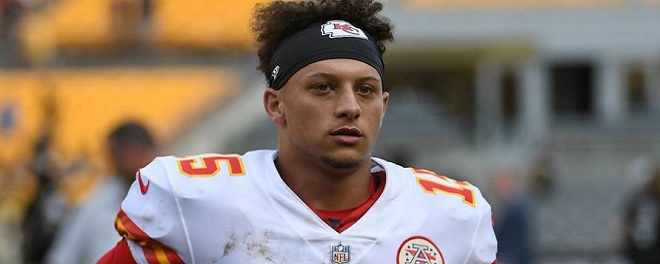
For more than a full season, a close game against the Kansas City Chiefs ended one way. Starting late in the 2023 season, Kansas City won 17 straight games decided by one possession, an NFL record by The Ringer's count. The run died on Sept. 5, 2025, when Justin Herbert and the Chargers beat the Chiefs 27-21 in São Paulo, Brazil.
By then it had stopped feeling like a streak. It felt like a rule. A one-score game with Patrick Mahomes on the other sideline was supposed to end with Kansas City kneeling on the ball, and picking against that looked like arguing with gravity.
So why does a run of results start to feel like a forecast? Researchers have been fighting over that question since a basketball study in 1985, and where the fight has landed is useful for anyone who watches football. It also explains why the same instinct is flat wrong in front of a slot machine.
Seventeen straight close wins came with a story attached
A streak feels predictable when it arrives with an explanation, and Kansas City's had a great one. The quarterback was Mahomes. The coach was Andy Reid. KSHB's Tod Palmer noted that the 2024 team went 11-0 in one-score games on its way to a third straight Super Bowl, so the record looked less like luck and more like a personality trait.
That's the trap. The idea that the Chiefs knew how to win close games explained every one-score win after the fact, and it would've explained the next one too. It never said what the team did late in games that it didn't do early. A story that fits every result isn't the same thing as a cause, and that gap is where the research gets interesting.
The other sideline in Brazil had a streak of its own. The Associated Press game story noted that the Chargers had dropped seven in a row to the Chiefs before that night. That skid invited its own tidy theory about a team that couldn't close against Kansas City. Both runs ended on the same night, and neither theory had seen it coming.
Fans in 1985 saw hot hands the shooting records couldn't find
The study everybody cites came out of Cornell and Stanford. Thomas Gilovich, Robert Vallone and Amos Tversky published it in Cognitive Psychology in 1985, and they started by asking 100 basketball fans what they believed. Ninety-one percent said a player has "a better chance of making a shot after having just made his last two or three shots" than after missing them.
Nearly as many, 84%, agreed that "it is important to pass the ball to someone who has just made several (two, three, or four) shots in a row." Then the researchers went to the records. They got field-goal logs from 48 Philadelphia 76ers home games in the 1980-81 season. The nine Sixers regulars in the sample hit a weighted 51% of their shots after a make and 54% after a miss.
Free throws by the Boston Celtics pointed the same way, and so did a controlled shooting test with Cornell's varsity players. The paper's verdict was that streak shooting lived in the eye of the fan. Pro players and coaches never accepted it. For three decades it was the textbook answer anyway, and the hot hand became the standard example of people seeing patterns that aren't there.
Chance throws longer runs than your gut expects
Why would nearly everybody see streaks the records didn't show? The 1985 paper's answer had to do with how people picture randomness. Ask someone to imagine 20 coin tosses and they'll picture a sequence that flips back and forth politely. The authors wrote that this mental version of chance "contains too many alternations and not enough long runs."
Real coins don't cooperate. Gilovich and his co-authors pointed out that four heads in a row is "quite likely in a sequence of 20 tosses." It still looks wrong to most people, as if the coin had picked a side. The common name for the effect is the clustering illusion: random results arrive in clumps, and a clump looks like a message.
The sharpest detail in the paper involves the shooters themselves. Cornell's players were paid in part for predicting their own hits and misses, and the paper reported that the outcomes of earlier shots "influenced Cornell players' predictions but not their performance." By the authors' count, the players backed their own streaks and weren't shooting any better. On that reading, if the guy holding the ball can't tell a run from a rhythm, a fan on the couch has no shot.
A 2018 correction found the hot hand hiding in the old data
That last finding didn't survive. Two economists, Joshua Miller and Adam Sanjurjo, took aim at the standard test, which compares how a shooter does after a string of makes with how he does after a string of misses. They showed it's tilted against finding a hot hand. Their illustration is a man named Jack who flips a coin and writes down whatever follows each heads.
Flip three times and you'd expect half of the flips Jack writes down to be heads. On average they're not. Work through the eight possible sequences and the expected share comes out to 5/12, purely because of which flips make the list. The authors call the bias "subtle but substantial," and it means a shooter with no hot hand at all should look a little cold after a run of makes.
Miller and Sanjurjo's paper in Econometrica, published in November 2018, reran the Cornell numbers with the tilt removed. For a 50% shooter taking 100 shots, they put the built-in bias at 8 percentage points. Once it was corrected, the average gap between shooting after a streak of makes and shooting after a streak of misses went "from +3 to a considerable +13 percentage points."
For scale, the authors set that next to the 12-point gap between the median three-point shooter and the top one in the 2015-16 NBA season. So the hot hand probably exists, at least for shooters in a gym. The paper's own wording stays careful, saying the old data "may well indicate hot hand shooting." What it can't do is tell you when a hot stretch started or how long it'll last.
Kansas City's 1-9 close-game record showed how much of the run was noise
Football sits closer to the gym than to the coin. Players get hurt and offensive lines gel, and a streak built on things like that is real form. The trouble is that a close-game record blends form with bounces, and the 2025 Chiefs showed how large the bounce share can be. The team that hadn't dropped a one-score game the year before went 1-9 in them, per KSHB, and missed the playoffs after 10 straight trips.
Look at what sat inside that record. Kansas City finished 6-11, so strip out the one-score games and the Chiefs went 5-2 when the margin was bigger than a possession. Sports Illustrated's Zak Gilbert found a number that hints at the rest: opposing kickers made 31 of 32 field-goal tries against the Chiefs last season. A defense has very little say in that.
The season even ended on an opponent's kick. On Jan. 4, 2026, in Las Vegas, Raiders kicker Daniel Carlson hit a career-long 60-yarder with eight seconds left, and KSHB's game report logged the 14-12 final as Kansas City's ninth one-score loss.
Nor did the slide wait for an injury. The loss in Brazil came in Week 1 with Mahomes under center. That was more than three months before Dec. 14, when a 16-13 defeat to the Chargers eliminated Kansas City from the playoff race. The AP's game story described Mahomes clutching his left knee after he was spun to the ground on the first play out of the two-minute warning.
None of this proves the 17-game run was pure luck. A club that reaches three straight Super Bowls is good, and good teams should win their share of close ones. It does suggest the one-score record was the least reliable thing about those Chiefs, even as it was the part that felt most like a rule.
A slot's hot streak has nothing behind it but volatility
Take away every real cause football has and you're left with about as clean a test case as you'll find. A slot has no quarterback and no game plan. Software draws each spin on its own, with no reference to the one before, so a run of wins or a run of dead spins can only reflect how the game's payouts are spread. That spread has a name.
High volatility is the label the book of ra slot carries on its game page at Shuffle, whose terms don't permit anyone in the US to use the site. In plain terms, a high-volatility game pays rarely and in lumps, which is the recipe for results that bunch up and look like streaks. A hot hour and a cold one come out of the same math, and the house edge sits under both.
The page's account of the gamble feature is even more useful. After a win, the player can stake it on calling a face-down card red or black. Where the game allows several rounds in a row, the page says "each one is the same fifty-fifty proposition applied to a larger sum." Three right calls feel like a read on the cards. There isn't one. The fourth call is the same coin flip with more riding on it.
This is where the 1985 paper, for all its trouble with basketball, turns out to be right. Its coin-toss picture of chance fits a reel perfectly, because there's no form underneath to find. Miller and Sanjurjo rescued the hot hand for shooters. Nobody has rescued it for a random number generator, and nobody will.
Ask what's causing the streak before you trust it
Here's the test I'd use on a Sunday. When a streak starts to feel like a forecast, try to name what's producing it, and be specific. A left tackle came back from injured reserve. A defense lost both starting corners. If you can point to something on the field that changed when the run started, the run might be telling you something.
That's how the useful offseason writing on Kansas City read. Walt's 2026 draft report on Kansas City didn't talk about magic running out. It panned the trade up to No. 6 for LSU corner Mansoor Delane. In grading the later picks, it said the Chiefs "lost their entire secondary this offseason" and "struggled to get to the quarterback last year." Those are causes. You can check on them every week this fall.
A streak with a cause ends when the cause does, and you'll often see it coming. A streak without one ends whenever it ends. The Chiefs' 17 in a row had some of each, which is why it fooled people for so long and then turned so hard. Before you treat the next hot run as a prediction, whether it's a team or a reel, ask what's behind it. If the only answer is the streak itself, that's your answer.
 Charlie Campbell