 Walt
Walt
The NFL Draft generates months of projections, comparisons, and arguments. Once the regular season begins, those conversations become considerably more practical. Rookies have to find roles against opponents determined to expose every weakness.
Several members of the 2026 class arrive with opportunities to contribute immediately. From quarterbacks asked to transform offenses to defenders filling obvious needs, their development could influence more than individual statistics. How quickly they adjust may alter game plans, positional rotations and expectations across the league.
Mendoza Gives Las Vegas a New Direction
Fernando Mendoza arrives in Las Vegas with an opportunity to bring stability to a position that previously lacked it. His decision-making and arm talent at Indiana suggested he was a quarterback capable of running an efficient passing offense without constantly chasing difficult throws.
Those wanting to learn more about the Raiders and other NFL teams entering the 2026 season will find the quarterback transition difficult to ignore. Mendoza gives the coaching staff a potential long-term foundation around which routes, protections and personnel can be shaped.
There should be benefits for the players around him, too. Consistent quarterback play can create clearer roles for receivers while allowing an offense to attack different areas of the field rather than building weekly plans around limitations.
Immediate expectations require perspective. Rookie quarterbacks rarely encounter seamless transitions, particularly when inheriting an unsettled position group. However, even if he begins the season behind Kirk Cousins, Mendoza gives Las Vegas a clear long-term direction at quarterback.
Bailey Gives the Jets Another Pass-Rush Threat
David Bailey addresses one of New York's clearest defensive needs. His production at Texas Tech demonstrated disruptive ability off the edge, while his first-step quickness and explosiveness could translate into early NFL snaps.
A rotational role would provide an obvious starting point. Bailey doesn’t necessarily need to dominate immediately; consistent pressure across limited snaps could earn him progressively larger responsibilities as the season develops.
His presence could also influence how opponents block New York's existing pass rushers. If Bailey begins demanding additional attention, protection schemes become more complicated, and opportunities can emerge elsewhere across the defensive front.
That matters late in close games. Coverage becomes considerably easier when quarterbacks have less time to work through progressions. Bailey's ability to create fourth-quarter pressure could therefore affect the entire defense, particularly on obvious passing downs when New York can release its edge rushers without worrying as much about the run.
Love Changes the Shape of Arizona's Backfield
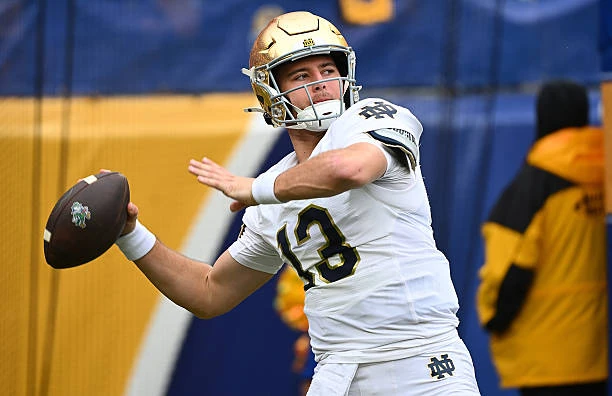
Jeremiyah Love brings an explosive dimension to Arizona after displaying considerable big-play ability at Notre Dame. His vision and contact balance provide a combination that should make him useful, whether he begins in a timeshare or quickly earns more significant responsibilities.
The appeal goes beyond long runs. An effective rushing attack can sustain drives, create manageable third downs and prevent the passing game from carrying the entire burden of moving the football.
Love also offers receiving ability out of the backfield. That gives Arizona another way to move him into favorable matchups, particularly when defenses commit additional numbers to stopping the run or pressure the quarterback.
Versatility like that can become especially useful in critical situations. Screens, short routes and designed touches allow an offensive coordinator to involve Love without relying exclusively on conventional carries. If that flexibility translates quickly, Arizona's backfield could become considerably less predictable throughout his rookie season.
Tate Gives Tennessee a Reliable Outside Target
Carnell Tate arrives with the size and route-running ability Tennessee has needed on the outside. His Ohio State experience should help him understand complex coverage looks and provide a polished foundation for his transition into an NFL passing offense.
A dependable outside receiver can affect how a defense allocates coverage. If opponents regularly match a top cornerback against Tate, other Tennessee pass-catchers may find more favorable matchups elsewhere on the field.
The quarterback room could benefit just as much. Tate’s route precision could provide clearer throwing windows as Tennessee’s passers build timing and trust with him. Fans following NFL insights can track how Tennessee’s passing game and new receivers develop during the season.
Tate’s first season will be about reliability as much as it is about production. Tennessee needs someone capable of consistently winning routes, converting opportunities and keeping drives alive. If Tate establishes himself early, defenses may have less freedom to focus coverage on Tennessee’s other top targets.
Reese Gives the Giants Greater Flexibility
Arvell Reese strengthens a Giants front seven that needs greater week-to-week consistency. His combination of athleticism and instincts at Ohio State made him capable of influencing plays from multiple alignments rather than operating within a single, narrowly defined assignment.
That versatility creates opportunities for immediate involvement. Reese can contribute in traditional defensive packages while also remaining useful when New York adds defensive backs and asks its linebackers to cover more space.
His arrival could benefit experienced teammates as well. A linebacker capable of handling multiple responsibilities gives coaches greater freedom when designing pressures, fitting the run, or adjusting assignments against offences that use motion.
Reducing explosive plays will be particularly important. Too many defensive breakdowns become damaging because one missed assignment produces significant yardage. Reese's range gives New York another defender capable of closing space quickly. How effectively he handles those responsibilities could influence whether the Giants become more dependable defensively this season.
Sadiq Offers the Jets an Easier Outlet
Kenyon Sadiq gives the Jets something valuable at tight end: flexibility. His receiving ability creates an underneath option for the quarterback, while his blocking provides another reason to keep him involved when New York wants to establish the run.
Third down could become an important part of his role. Tight ends who consistently find space underneath can provide straightforward completions when defenses protect deeper routes or bring additional pressure.
That presence could make life easier for New York's quarterback room. Rather than forcing throws outside when plays break down, having a dependable check-down option provides another route toward keeping possessions alive.
Sadiq's blocking also prevents his involvement from automatically revealing whether a run or pass is coming. That dual-purpose value gives the Jets additional freedom on early downs and near the goal line, although his impact will depend first on how quickly he returns to full fitness after his offseason hernia setback. If healthy and able to adapt quickly, Sadiq could become an important part of creating a more balanced offense.
Rookie Impact Will Take Different Forms
Not every successful rookie season needs record-setting statistics. Some players change teams by stabilizing troublesome positions, creating favorable matchups or giving coaches options that were not available the previous year.
The 2026 class contains several newcomers positioned to make that kind of contribution immediately. Mendoza carries the largest positional responsibility, while Bailey, Love, Tate, Reese and Sadiq can influence specific areas of need. Their real measure will come from how quickly those draft-night projections beco
 Charlie Campbell