 Walt
Walt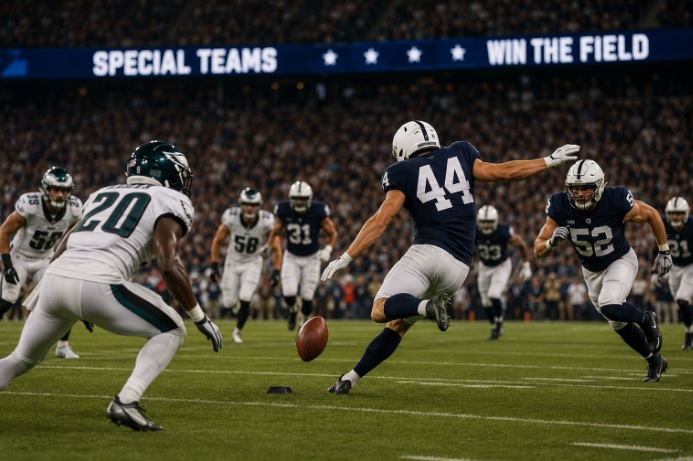
For many years, special teams received less attention than offense or defense during player evaluation. Coaches often viewed kick coverage, punt returns, and field-goal units as supporting elements rather than major factors in team success. That perspective has changed. Modern football places greater value on field position, roster versatility, and consistency in every phase of the game. As a result, scouts spend more time studying prospects who can contribute on special teams from the first day of training camp.
Fans now follow football through a wide range of online platforms like rollambia casino that stream live games, publish highlights, and offer instant access to statistics, replays, and tactical breakdowns. These services make it easier to watch every phase of a game instead of focusing only on offensive drives. As viewers gain access to multiple camera angles and detailed analysis, they notice how special teams influence field position, momentum, and scoring chances. That broader understanding has also increased interest in the players who excel in kicking, coverage, and return units, giving special teams prospects more visibility than they received in previous years.
The increased focus on special teams also reflects changes in roster construction. Coaches want players who can help in several situations instead of specialists who only play a handful of snaps each week. That approach has raised the profile of prospects with proven experience in the kicking game.
The Importance of Field Position
Field position shapes every football game. A strong drive often begins with a favorable return or an excellent coverage play. Likewise, poor execution on special teams can leave an offense with a difficult starting point or give an opponent a short field.
Small differences in starting field position often influence scoring chances. Even a gain of ten or fifteen yards after a kickoff or punt can change play-calling decisions and reduce pressure on an offense.
Special teams affect field position through several areas:
- Kickoff coverage
- Punt coverage
- Punt returns
- Kickoff returns
- Field-goal execution
- Long snapping
- Directional punting
Each assignment requires discipline, awareness, and athletic ability. Scouts now recognize that success in these areas often translates into dependable performance at the professional level.
Coaches Value Immediate Contributions
Every rookie enters training camp with something to prove. Few first-year players receive starting roles immediately, but many earn playing time through special teams.
A young linebacker may spend only a few defensive snaps on the field during his first season, yet he can appear on nearly every kickoff and punt. Those plays allow coaches to evaluate effort, discipline, tackling ability, and football intelligence under game conditions.
Special teams also help prospects develop confidence before taking larger defensive or offensive responsibilities.
Players who embrace those duties often remain active on game day because they contribute across multiple units.
Athletic Traits Stand Out
Scouts evaluate far more than size and speed. They also study movement skills that fit special teams responsibilities.
Several athletic traits receive close attention:
|
Trait |
Why It Matters |
|
Straight-line speed |
Helps players reach returners quickly |
|
Balance |
Supports tackling in open space |
|
Acceleration |
Creates separation during coverage |
|
Change of direction |
Improves pursuit angles |
|
Body control |
Helps avoid blocks |
|
Stamina |
Maintains performance throughout the game |
Special teams frequently create one-on-one situations in open space. Players must react quickly without relying on help from nearby teammates.
Prospects who consistently finish tackles under those conditions often receive stronger evaluations.
Versatility Has Become More Valuable
Professional football rewards players who perform several roles. A safety might also serve as a punt gunner. A running back may contribute on kickoff coverage while acting as a reserve ball carrier. Tight ends often protect during punts and field goals while supporting offensive packages.
Versatility allows coaching staffs to build balanced game-day rosters.
Instead of carrying specialists for every assignment, teams can rely on athletes who handle several responsibilities with confidence.
That flexibility also protects against injuries during long seasons.
College Experience Matters
College football offers valuable evidence for scouts. Game film reveals how prospects react under pressure and whether they embrace demanding assignments.
Scouts often examine:
- Number of special teams snaps
- Tackling consistency
- Blocking technique
- Lane discipline
- Ball security on returns
- Decision-making
- Effort after the whistle
Statistics alone rarely tell the full story. Film provides context that numbers cannot capture.
A player who records only a few tackles may still execute every assignment correctly and help teammates make the stop.
Those details influence draft evaluations.
Rule Changes Have Increased the Focus
Football continues to adjust rules surrounding kickoffs and player safety. Those changes require athletes to process situations quickly while maintaining proper positioning.
Return strategies continue to evolve as coaches search for efficient ways to create field position without unnecessary risk.
Coverage units also adjust their spacing and pursuit angles based on current rules.
Because of these developments, teams seek prospects who learn quickly and remain disciplined throughout every play.
Football intelligence now carries even greater value on special teams.
Mental Discipline Separates Prospects
Special teams demand concentration from beginning to end.
One missed assignment can erase several successful plays.
Prospects must recognize formations, communicate with teammates, react instantly after the snap, and maintain proper leverage.
Mental preparation often determines whether an athlete earns consistent playing time.
Scouts appreciate players who:
- Study opponents carefully
- Understand situational football
- Communicate clearly
- Recover after mistakes
- Maintain composure during close games
These qualities often translate well to larger responsibilities later in a player's career.
Specialists Continue to Draw Interest
Punters, kickers, and long snappers rarely attract the same public attention as quarterbacks or pass rushers, yet teams invest significant effort in evaluating them.
Modern specialists train year-round to improve consistency, accuracy, and timing.
Scouts examine several factors beyond simple statistics.
For kickers, they review:
- Accuracy from different distances
- Performance under pressure
- Kick trajectory
- Consistency throughout the season
For punters, they focus on:
- Hang time
- Directional control
- Distance
- Placement inside the twenty-yard line
Long snappers also receive detailed evaluations because every field-goal attempt and punt begins with their execution.
Reliable specialists reduce mistakes and create stability across the entire unit.
Special Teams Reveal Competitive Character
Certain situations expose a player's competitive approach more clearly than others.
Kick coverage often requires full-speed effort without knowing whether the ball will reach that side of the field.
Players who sprint every play demonstrate commitment regardless of whether they receive personal recognition.
Scouts value those habits because they often carry into offensive and defensive roles.
Coaches consistently praise athletes who accept demanding assignments instead of avoiding them.
That attitude strengthens the entire roster.
Film Study Has Improved Evaluation
Technology allows scouting departments to review every movement during special teams plays.
Instead of focusing only on tackles or returns, evaluators analyze positioning before the snap, reactions during the play, pursuit angles, block engagement, and finishing technique.
Video analysis helps identify prospects who consistently perform difficult assignments correctly.
Those details often separate players with similar athletic profiles.
Teams also compare performances against stronger opponents to determine how prospects respond when competition becomes more demanding.
Roster Competition Continues to Increase
Professional football offers limited roster spots.
Many prospects possess similar physical ability, making small differences more meaningful during evaluations.
Special teams often provide the deciding factor.
Consider two linebackers with comparable defensive production. If one contributes effectively on four special teams units while the other participates on only one, coaches usually gain greater roster flexibility from the first player.
The same principle applies to receivers, safeties, cornerbacks, and running backs.
Every additional role strengthens a player's chances of making the final roster.
Leadership Appears in Every Phase
Leadership extends beyond offensive huddles or defensive adjustments.
Special teams require communication before every snap.
Players identify assignments, confirm responsibilities, and react together within seconds.
Veteran prospects often direct younger teammates while maintaining their own responsibilities.
Scouts notice those interactions because leadership supports consistency during stressful situations.
Athletes who encourage teammates and maintain high standards often become valuable members of the locker room as well.
Development Never Stops
Many successful professionals began their careers primarily on special teams.
Those early assignments helped them improve tackling, decision-making, conditioning, and football awareness before expanding into larger offensive or defensive roles.
Young players continue to develop through repetition.
Each game offers another chance to sharpen technique and earn greater trust from coaches.
That steady progress benefits both the athlete and the team.
Looking Ahead
Special teams no longer represent an afterthought during player evaluation. Coaches, scouts, and front offices recognize their direct impact on field position, game management, roster construction, and weekly consistency. Every phase of football matters, and special teams often create the hidden advantages that influence close contests.
Prospects who combine athletic ability with discipline, intelligence, versatility, and strong fundamentals continue to attract serious attention throughout the scouting process. Their contributions extend far beyond a single tackle or return. They strengthen roster depth, improve game-day flexibility, and create dependable performance in situations that demand precision.
As football continues to evolve, special teams prospects will remain an essential part of draft discussions and roster decisions. Teams understand that success depends on complete players who embrace every responsibility, and special teams offer one of the clearest ways to identify those qualities before a player reaches the professional level.
 Charlie Campbell