 Walt
WaltThe NFL has come a long way from being a niche American sport for UK viewers. American football has steadily built a following on this side of the Atlantic, with more British sports fans watching regular-season games, following individual teams and, increasingly, placing bets on the NFL.
The growth of the sport in the UK is particularly noticeable around the annual London Games. The NFL says the UK is home to more than 17 million fans, while more than three million spectators have attended regular-season games in London since 2007. There will be three London games during the 2026 season, including two at Tottenham Hotspur Stadium and one at Wembley.
For someone accustomed to betting on football, horse racing or rugby, however, NFL betting can initially look rather complicated. There are unfamiliar teams, a different league structure and betting markets that are not always immediately obvious.
The good news is that the basics are relatively straightforward once you understand the terminology.
Understanding NFL Betting Odds
The first thing a UK bettor needs to understand is that American sportsbooks commonly display odds in a different format to British bookmakers.
In the UK, decimal odds are generally used. For example, odds of 2.00 mean that a £10 stake would return £20, including your original £10 stake.
You may encounter American odds when researching NFL games. These are usually presented as either positive or negative numbers.
For example:
+200 means a £10 stake would produce £20 profit, plus the original £10 stake.
-200 means you would need to stake £20 to make £10 profit.
UK bookmakers will normally convert these into decimal odds, so a British bettor does not necessarily need to become an expert in American odds. However, understanding the terminology is useful when comparing information from US-based NFL websites, analysts and broadcasters.
It is also important to remember that odds are not predictions of certainty. They reflect the bookmaker's assessment of probability while also incorporating a margin.
What Is The Moneyline?
The simplest NFL bet is the moneyline.
This is essentially a bet on which team will win the game.
If the Kansas City Chiefs are playing the Buffalo Bills, for example, a bookmaker may offer one set of odds for the Chiefs and another for the Bills. You simply select the team you believe will win.
Unlike football betting in the UK, there is no draw market in the standard NFL moneyline because regular-season games that are tied after regulation go to overtime.
For a beginner, moneyline betting is probably the easiest place to start because it requires an understanding of only one question: Who will win?
However, the shortest odds are not automatically the best bet. A heavily favoured team can win regularly while still offering poor value if the odds do not adequately reflect its probability of winning.
What Is The Point Spread?
The point spread is one of the most important concepts in NFL betting.
Instead of simply betting on the winner, the spread attempts to level the playing field between two teams.
Imagine the Philadelphia Eagles are listed at -6.5 against the Jacksonville Jaguars.
The Eagles would need to win by at least seven points for a bet on them to cover the spread.
A bet on Jacksonville at +6.5 would win if the Jaguars won outright or lost by six points or fewer.
This makes spread betting particularly interesting because an NFL team can win a game but still lose against the spread.
Research into historical NFL betting lines has also found that market lines can contain considerable predictive information, although that should not be interpreted as meaning bookmakers' lines can be beaten easily.
Over And Under Betting
Another beginner-friendly market is totals betting, sometimes called over/under betting.
Suppose a bookmaker sets the total points for an NFL game at 47.5.
You can bet on:
Over 47.5 – the two teams must score at least 48 points combined.
Under 47.5 – the teams must score 47 points or fewer.
This is where understanding the teams becomes particularly important.
A game involving two high-scoring offences and vulnerable defences could be more attractive to an over bettor, while two strong defensive teams or struggling offences might make the under more appealing.
Of course, injuries, weather, coaching decisions and game circumstances can all influence the final score.
Player Props Offer Another Option
Once you become more familiar with the NFL, you will probably encounter player proposition bets, or player props.
These involve predicting whether an individual player will reach a particular statistical target.
For example, a bookmaker might offer:
- Quarterback passing yards
- Quarterback passing touchdowns
- Running-back rushing yards
- Wide-receiver receiving yards
- Player receptions
- Defensive sacks
These markets can be appealing because they encourage bettors to research individual players rather than simply picking a winner.
However, they also require considerably more knowledge. A receiver's statistics can be heavily influenced by the opposing defence, game script, quarterback performance and injuries to other players.
Do Your Research Before Betting
NFL betting is not something where knowing the biggest team names is enough.
A beginner should get into the habit of researching several factors before placing a bet.
Team form is an obvious starting point, but the NFL is particularly sensitive to injuries. Losing a starting quarterback, offensive lineman or key defensive player can dramatically alter a team's prospects.
Quarterback performance is also crucial. Unlike many sports, one player can have an enormous influence on an NFL team's success.
You should also examine offensive and defensive statistics, recent opponents, home and away performances, coaching changes and the team's schedule.
Don't simply look at the previous week's score.
A team that won 31-10 against a poor opponent may not necessarily be in better shape than a team that lost 24-21 after playing one of the league's best sides.
The NFL Draft Can Change The Betting Picture
One of the biggest differences between NFL betting and betting on established European football leagues is the importance of the annual draft.
Every year, teams select college players in an attempt to strengthen their rosters. The 2026 NFL Draft contained 257 selections across seven rounds, with the Las Vegas Raiders holding the first overall pick.
The first round included several players who could have a meaningful impact on their new teams, including quarterback Fernando Mendoza to the Raiders, edge rusher David Bailey to the Jets, running back Jeremiyah Love to the Cardinals, wide receiver Carnell Tate to the Titans and linebacker Arvell Reese to the Giants.
But this is where beginners need to be careful.
A highly rated draft class does not automatically mean a team will suddenly become a Super Bowl contender.
So, how much should the draft influence your bets?
A sensible approach is to view the draft as one part of a much bigger picture.
A team that already has a strong roster but needs one particular position could benefit enormously from a first-round selection. Conversely, a team with significant weaknesses across its roster may not be transformed by one or two highly rated rookies.
Quarterbacks are the biggest potential exception.
If a team drafts a quarterback who immediately becomes its starter, the betting market can change substantially because the quarterback has such a significant influence on the team's performance.
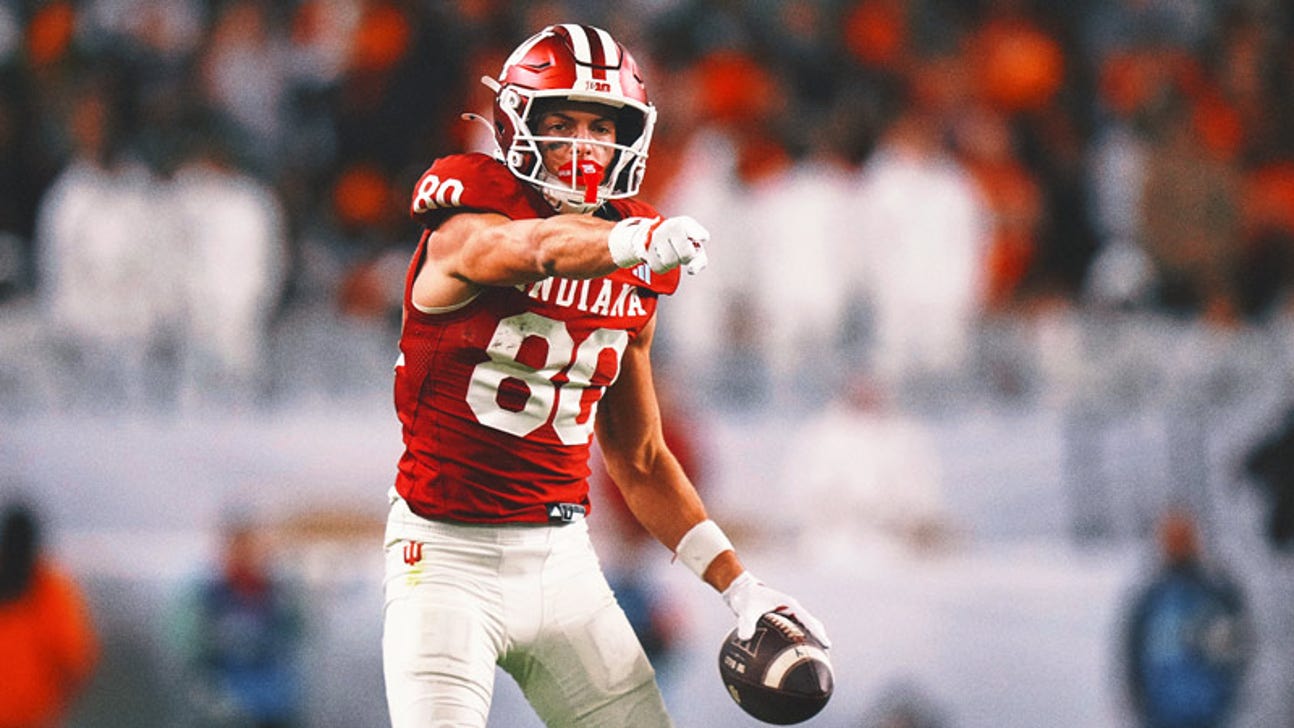
The 2026 Raiders are an interesting example. They used the first overall pick on Indiana quarterback Fernando Mendoza, meaning his transition to the NFL is one of the major storylines to watch when assessing Las Vegas this season.
However, even highly regarded rookies need time to adjust to the speed, complexity and physical demands of professional football.
This means bettors should resist the temptation to treat draft grades as guaranteed predictions of future success. Draft analysts can praise a team's selections, but ultimately those players have to perform on the field.
Reuters' post-draft assessment, for example, gave several teams strong grades while acknowledging that judging the eventual success of the class would take time.
Free Agency And Trades Matter Too
The draft is only one part of the NFL's roster-building process.
Free agency and trades can be equally important when assessing a team before the season.
A team might have an excellent draft but lose several established starters during the offseason. Another might have a relatively quiet draft while making a major trade for an established quarterback or defensive star.
This is why it is worth looking at the entire offseason, rather than judging teams purely on their draft selections.
By the time the season approaches, you should have a much clearer idea of how a team's roster has changed.
Pay Attention To The NFL Schedule
The NFL schedule can also have a major influence on betting.
A team does not play every other team during the regular season, meaning the strength of its opponents can vary considerably.
Travel is another consideration, particularly for international games.
For UK fans, the London Games provide a great opportunity to watch NFL action at a more convenient time. The 2026 schedule includes the Indianapolis Colts against the Washington Commanders at Tottenham on October 4, the Philadelphia Eagles against the Jacksonville Jaguars at Tottenham on October 11, and the Houston Texans against the Jaguars at Wembley on October 18.
These games can also provide an accessible introduction to NFL betting for British sports fans who want to combine attending a game with following the sport more closely.
Don't Confuse Familiarity With Knowledge
One of the biggest mistakes a new NFL bettor can make is backing the team they know best.
The Dallas Cowboys, Kansas City Chiefs, New England Patriots and other famous franchises attract huge audiences, but popularity does not necessarily make them good bets.
Instead, ask why the odds have been set at their particular level.
If a famous team is priced at short odds, the bookmaker is effectively saying that the team is expected to win with a high probability. You need to decide whether you agree with that assessment.
This is where research becomes more valuable than simply following reputation.
Start Small And Keep Track Of Your Bets
A good way to learn NFL betting is to keep things simple.
Rather than immediately trying complicated accumulators involving multiple games and player props, concentrate on individual markets and record your bets.
You could keep track of:
- The bet you placed
- The odds
- Your stake
- The reason for your selection
- The result
- Your overall profit or loss
Over time, this can reveal whether your betting decisions are actually improving or whether you are simply remembering the occasions when you were right.
Most importantly, set a budget before you start and only bet what you can afford to lose. Gambling should be treated as entertainment rather than a way of generating income.
NFL Betting Is Becoming Easier To Follow In The UK
For British sports fans, the NFL is no longer an obscure American competition that requires an encyclopaedic knowledge of US sport.
The continued presence of London Games, widespread television and streaming coverage, fantasy football, social media and easier access to statistics have all made the sport considerably more accessible.
The NFL's own figures underline the scale of its UK audience, with more than 17 million fans identified in the country and more than three million people having attended London regular-season games since 2007.
As more UK sports fans become familiar with the rules and teams, betting naturally becomes another way to engage with games.
For beginners, though, the key is not to rush.
Learn how decimal odds work, understand moneylines and spreads, research teams and players, pay attention to injuries and offseason moves, and treat the NFL Draft as an important piece of information rather than a guaranteed indicator of future success.
Once those fundamentals are in place, NFL betting becomes much less intimidating — and following the sport itself becomes considerably more rewarding.
 Charlie Campbell