 Walt
Walt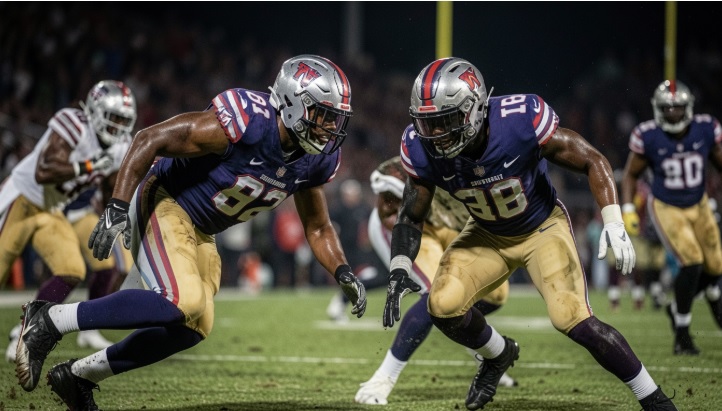
The fourth quarter in the NFL rarely looks fast. It feels heavy. Routes lose sharp edges, releases soften, and even elite receivers start fighting their legs before they fight coverage. That is where top cornerbacks separate themselves.
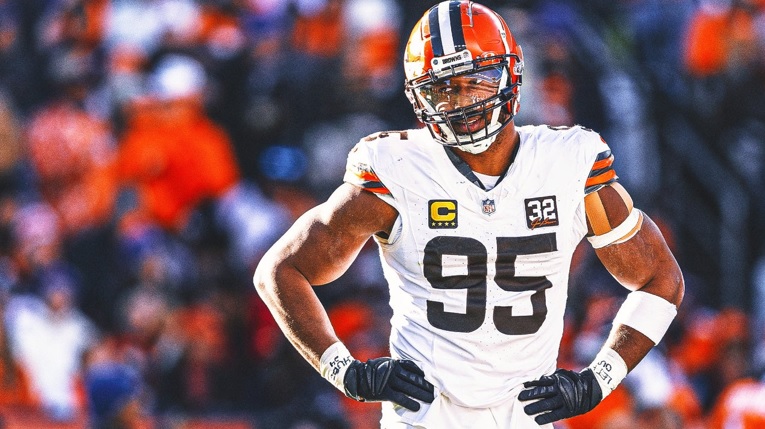
A common late-game image defines elite defensive backs: a long drive deep into double-digit plays, receivers bent over between snaps, hands on hips, while the corner still moves like it is the opening series. That contrast explains why Sauce Gardner and Patrick Surtain II stand out in modern coverage football.
Modern football analysis borrows ideas from endurance sports to understand how athletes sustain performance under fatigue. Similar concepts appear in cycling, where pacing and energy distribution define late-stage output. This crossover logic is why discussions about conditioning sometimes reference cycling betting odds online as a broader example of endurance-driven performance modeling.
Why Cornerback Becomes the Hardest Job Late in Games
Cornerback is constant reaction under uncertainty. A receiver knows the route. The defender must read intent in real time while holding leverage and balance.
On a single drive, an outside corner repeats high-stress actions:
- Backpedal into transition without false steps
- Hip flip into sprint recovery
- Sudden stop near the boundary line
- Mirror release moves in tight space
- Short-area burst after direction change
Each movement taxes lower-body stability more than straight sprinting. Fatigue shows first as delay, not slow speed. Even a small hesitation creates separation.
That is why late-game coverage often breaks down. The position does not reward effort alone. It rewards control repeated under exhaustion.
Sauce Gardner and the Economy of Motion
Sauce Gardner plays corner like a system that wastes nothing. His game is built on efficiency rather than volume.
He wins early in routes by staying square and controlling leverage instead of chasing angles. That reduces recovery stress over four quarters. By the fourth, the saved energy becomes visible.
Reports from Next Gen Stats and league tracking data consistently place Gardner among the hardest corners to target, with low completion rates allowed and tight-window throws.
His approach follows simple principles:
- Control leverage before speed matters
- Eliminate unnecessary footwork
- Delay commitment until release is clear
- Recover with angles, not panic speed
This style holds up beyond 50 defensive snaps. Receivers start rounding stems and losing burst. Gardner does not need extra acceleration; opponents lose precision instead.
Patrick Surtain II and Mechanical Stability Under Fatigue
Patrick Surtain II brings a different form of control. His edge is mechanical consistency rather than reduced movement.
From his Alabama scouting profile through the NFL, one trait remains stable: smooth hip transitions under pressure. He rarely crosses his feet in recovery and keeps clean stride patterns late in drives.
Fatigue in receivers shows predictable effects:
- Less sharp cuts at breaks
- Slower hip rotation out of stems
- Reduced second-step explosiveness
- Wider angles near the sideline
Surtain’s technique holds structure as these issues appear. He does not overreact early. He stays connected through hips and mirrors without breaking posture.
As receivers lose precision, he loses nothing structural.
The Physical Reality Behind Fourth Quarter Coverage
Defensive back training has shifted from long endurance work to repeat explosive stress. The goal is not longer effort but faster recovery between snaps.
Common methods include:
- Mirror reaction drills under fatigue
- Resistance hip transition work
- Short-burst sprint intervals with limited rest
- Reactive ball-tracking drills
- Change-of-direction repetition under constraint
These sessions train neuromuscular speed and decision clarity. By the fourth quarter, mental processing becomes as important as physical output. Corners must still read formations, anticipate routes, and maintain discipline.
Small lapses create openings. That is why evaluation focuses on stability, not just peak speed.
Late-Game Separation Is Not Always About Talent
The key shift in modern coverage football is degradation, not peak athleticism.
Receivers lose precision. Corners either lose structure or maintain it. That difference decides late drives in close games.
Gardner and Surtain succeed in different ways. One minimizes wasted motion. The other preserves mechanics. Both reduce fatigue’s impact on execution.
By the final drive, elite receivers still rely on talent. Elite cornerbacks rely on conditioning that keeps technique intact when everything else slows down.
 Charlie Campbell