 Charlie Campbell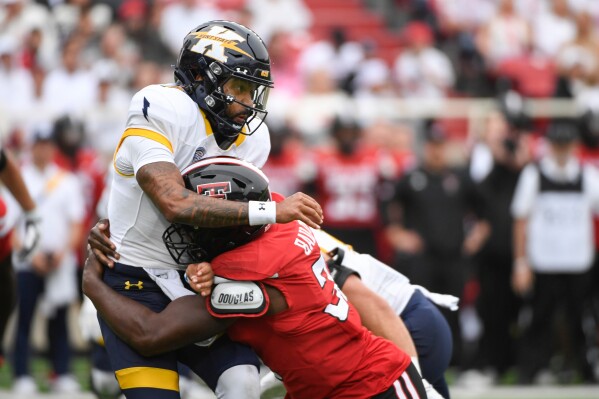
Edge Defender Class
Early-round talent: A-Mid-round: B+
Late-round: B
Overall grade: B+
2025 prospects vs 2026
Abdul CarterArvell Reese
David Bailey
Mykel Williams
Rueben Bain
Jalon Walker
Shemar Stewart
James Pearce Jr
Keldric Faulk
Zion Young
Just to be clear, this article and series are all my opinion. I base my evaluation on my own film study and also on information I’ve gotten from general managers, directors of college scouting, national scouts, area scouts, and NFL coaches who know way more than I do.
I think Abdul Carter was a better prospect than Arvell Reese and David Bailey, but they are similar players with versatile speed and explosion off the edge. In my opinion, Mykel Williams was a better prospect than Rueben Bain even though Bain might end up going higher this year than Williams did last year. For me, Bain is on a par with Jalon Walker and Shemar Stewart even though they are all very different types of edge rushers. From tape and ability perspective, James Pearce Jr showed more pass rush ability, but Pearce slid because of character. Keldric Faulk and Abdul Carter would be behind Pearce as prospects.
Safest Pick: David Bailey, Texas Tech 
Previous Picks:2024 Abdul Carter
2024 Dallas Turner
2023 Will Anderson
2022 Aidan Hutchinson
2021 Jaelen Phillips
2020 Chase Young
2019 Nick Bosa, Josh Allen
2018 Bradley Chubb, Tremaine Edmunds
2017 Myles Garrett
2016 Joey Bosa, DeForest Buckner
2015 Dante Fowler
2014 Jadeveon Clowney
2013 Bjöern Werner, Dion Jordan
This was an easy choice as I think Bailey is a safe pick to to be an effective NFL pass rusher. Bailey is a fast edge rusher with ability to bend, redirect, and has natural quarterback hunting skills. While he may not become an elite run defender, I think Bailey will be a good pass rusher during his pro career.
Biggest Bust Potential: Cashius Howell, Texas A&M 
Previous Picks:2025 Mike Green
2024 Bralen Trice
2023 Nolan Smith
2022 Amare Barno
2021 Gregory Rousseau
2020 Terrell Lewis
2019 Jachai Polite
2018 Arden Key, Lorenzo Carter
2017 Takk McKinley
2016 Kevin Dodd, Noah Spence
2015 Owa Odighizuwa, Randy Gregory
2014 Kareem Martin, Dee Ford
2013 Barkevious Mingo
This was a tough selection. I like Howell as a player as he plays with relentless effort and has a fantastic motor. However, at 6-foot-2, 248-pounds Howell is undersized and lacks length. I can envision where he will struggle to shed blocks in the NFL and is too undersized to be a run defender in the base. Howell was excellent with the Aggies in 2025, but I am not sure he will translate to the NFL level.
Edge Defender Rankings by Attributes
Pass Rush:
NFL prototype: Myles Garrett, Browns
- David Bailey
- Rueben Bain
- Arvell Reese
- Keldric Faulk
- Zion Young
Recap: The NFL is a passing-driven league, and coaches will tell you that an elite pass-rusher is the most important position on the defensive side of the ball. Unless a team has a defensive tackle like the Rams’ Aaron Donald, it has to have edge rushers who can consistently pressure the quarterback.
In the pass rush, Bailey is a lightning-fast edge rusher with devastating speed around the edge. Bailey has tremendous first-step quickness, and he explodes off the ball. Bailey can fly upfield and blow by offensive tackles even when they know his speed rush is coming. Bailey shows a variety of pass-rushing moves as he has an excellent spin move, darts to the inside, and has some functional power. Bailey shows impressive speed to power rushes and has upper-body strength to get a bull rush as a change-up on offensive tackles. The bull rush and the speed to power take tackles by surprise, and that makes Bailey a tough rusher to defend. Along with being fast off the ball, Bailey has easy acceleration to eat up ground in a blur. He is a dynamic pursuit defender and a true speed rusher quarterback hunter.
In the pass rush, Bain is a solid contributor but not a world beater that is going to be a mid-teens or 20 sack kind of defender like a Myles Garrett or T.J. Watt. While Bain is quick and has some speed to close, Bain is not ultra-fast with dominant speed rush off the edge. He has a powerful bull rush and some quickness out of his stance, but he has some stiffness and can struggle to dip his hips to redirect to the quarterback. As a rusher, he has the versatility to move inside and go against guards. In the pro ranks, Bain will probably never be a prolific sack artist, but he could be a really solid complement to good rushers around him.
Reese is a dangerous speed rusher off the edge. He is fast and explosive to get upfield to run around offensive tackles. Reese is agile and athletic to dip underneath blockers with the ability to sink his hips to get pointed to the quarterback. Reese could be utilized as a subpackage edge rusher, along with being a pass coverage linebacker. He is extremely versatile. If Reese is used primarily as a pass rusher like Micah Parsons or Abdul Carter, it would help Reese to continue to develop and refine some pass-rushing moves. The lack of experience and development has me rating him behind Bailey and Bain. But in time, Reese could be the best rusher of the group.
In the pass rush, Faulk is a developing player, but he is rising and improving. Faulk is tall, long, and plays with good extension to keep tackles from getting into his chest and getting a hold of him. Faulk can rush with power and knock blockers backwards while bulling them towards the quarterback. While Faulk is not a freak speed rusher like Von Miller, Faulk has speed to get upfield and shows an impressive burst to close. When Faulk gets free, he eats up ground in a hurry to finish the rush. Faulk can rush from end or tackle and shows versatility with where he can line up. Faulk is an ascending pass rusher now and could end up being even better in a few years, given his work ethic and commitment.
In the pass rush, Young has quickness off the ball and enough speed to turn the corner. He is an impressive power rusher who uses his length and strength to bullrush blockers backward into the pocket. Young uses his length and strength to shed blocks and push defenders away. Young also has quality vision, recognition, and the ability to adjust to quarterbacks as they scramble in the pocket. Young uses his hands and feet at the same time to battle blockers. Young has a burst to close and enough speed to get around the corner on tackles. He also has good speed to power rush. For the NFL, Young could stand to improve and expand his repertoire of moves.
Run Defense:
NFL prototype: Aidan Hutchinson, Lions
- Rueben Bain
- Keldric Faulk
- Zion Young
- Arvell Reese
- David Bailey
Recap: Defending the run isn’t as in demand as it used to be with NFL coaches, but they still watch it closely when evaluating prospects, and teams need some tough run defenders at the point of attack. They are also looking closely at the effort. This class features some quality run defenders.
Bain is a physical defender at the point of attack and an excellent run defender. He is tough as nails and difficult to move in the ground game. He holds his gap well with the strength to work off blocks. With a quality lateral anchor and good leverage, offensive linemen struggle to move Bain. He routinely takes on and sheds blocks to get in on tackles that help produce quality down-and-distance situations. Bain has a steady motor and doesn’t quit on plays. With his strength, build, good fundamentals, and technique, Bain should be an asset as a run defender at the next level.
As a run defender, Faulk is special, and he is a force at the point of attack. Faulk is very strong and has no problem holding his ground against downhill runs. He sets the edge and shows impressive power to shed his block and get in on tackles. There are many run plays that Faulk blows up in the backfield by bullrushing through blockers and causing disruption. He is adept at pushing upfield, shedding the block, and pursuing to make the tackle. Faulk is an above-average run defender who should be a real asset to his pro defense in stopping the ground game.
As a run defender, Young is strong at the point of attack with physicality, and he is skilled at setting the edge. He is strong enough to hold his ground against downhill runs coming straight at him, and shows the ability to get off blocks. He can stuff running lanes and shed to pursue outside his gap. For the NFL, Young is a quality run defender who should be an asset to his pro defense.
In run defense, Reese is big and physical in the tackle box. He reads his keys quickly and is quick to read his keys to get in position to make tackles. Reese is strong enough to take on and shed blocks with a quick burst to fire to the ball carrier. With his strength and physical attitude, Reese will hit hard and put ball carriers into the turf with physicality. Reese is fast, big, and strong. He should be a three-down edge rusher and linebacker in the NFL.
As a run defender, Bailey has some natural issues given his size. Bailey fights and competes in the ground game nicely on some plays, but he has limitations for the NFL with his lack of weight and length. Bailey could have problems holding up against downhill runs coming straight at him for four quarters with offensive tackles that weigh 50-80 pounds more than him, pounding on him all game. Bailey will need to be rotated as a run defender, but in the ground game, he is good in pursuit and shows his speed to chase.
Motor:
NFL prototype: Maxx Crosby, Raiders
- Rueben Bain
- Keldric Faulk
- Arvell Reese
- David Bailey
- Zion Young
Recap: Prospects who show a lack of effort can get knocked quickly by coaches when they start evaluating players. Coaches have zero patience for players who dog it. Conversely, a great motor will help players who may be short on athletic ability. This draft class has a lot of good motors amongst the early-round prospects, and none of this group has a bad motor or takes plays off.
Bain and Faulk have excellent motors, and they play with relentless effort. Reese was consistent and had a steady motor in 2025. Bailey and Young both played hard and were not loafing on plays.
Forcing Fumbles:
NFL prototype: Myles Garrett, Browns
- David Bailey
- Rueben Bain
- Zion Young
- Keldric Faulk
- Arvell Reese
Recap: The art of a strip sack is a great equalizer in the NFL. Strip sacks can change games and have a big impact on the scoreboard. Bailey is the clear leader in this category, as he had eight forced fumbles over the past two seasons. Bailey is very cognizant of going for the strip when he gets the opportunity.
Bain had one forced fumble last year, but had three as a freshman. He showed instincts to go for the ball. Young had three forced fumbles over the past two seasons, and he has the potential to do more. Faulk only had one forced fumble over the past two seasons, and Reese had zero. They both could stand to improve their ability to go after the ball when getting to the quarterback.
Versatility:
NFL prototype: T.J. Watt, Steelers
- Arvell Reese
- Keldric Faulk
- Zion Young
- Rueben Bain
- David Bailey
Recap: Defensive coordinators love versatility. Edge defenders who drop in coverage and play in space are in demand. Coaches also like ends who can move inside to tackle on passing downs. This class of edge-rushers features a lot of versatility as a group.
This group is very versatile and can be lined up in a variety of places. Reese is extremely versatile as he can be an edge rusher, a Sam linebacker, or a Mike linebacker. However, picking one position to let him develop and master first could be the best plan for him to adjust to the NFL. Having him too many different things could screw him up and cause him problems (see Haason Reddick in Arizona).
Faulk is versatile as he can play five, seven, or nine technique on the edge while also being able to kick inside in the sub package. Young is similar except he probably can’t move inside in sub. Bain is similar, where he can play end and move inside to rush in the sub package. Bailey could put his hand in the ground and rush as an end, and could also play some Sam linebacker, but focusing on edge rush would be better for Bailey.
 Walt
Walt