 Walt
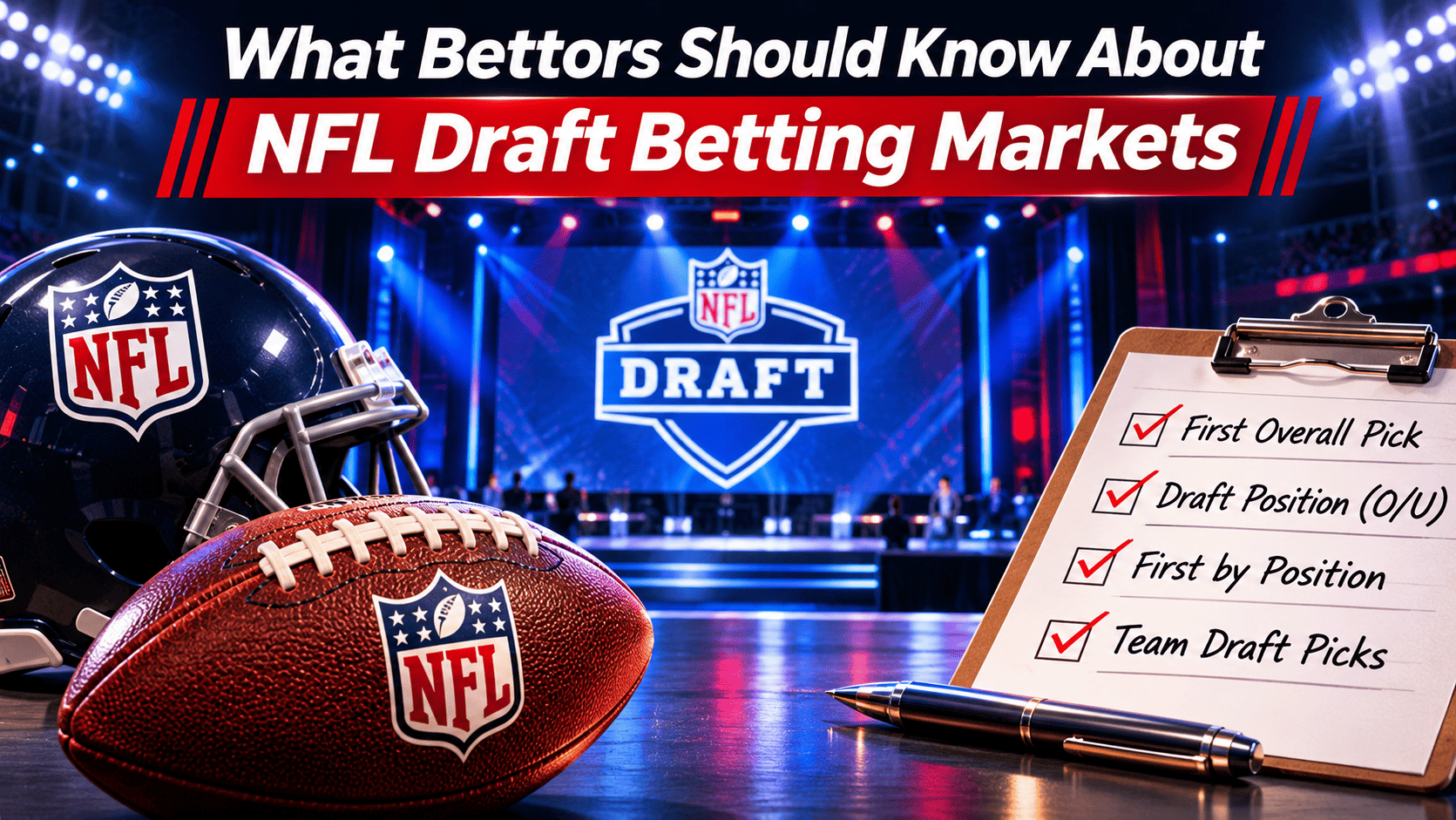
The NFL Draft has become a major event for football fans, attracting attention months before teams announce their selections. Sportsbooks have responded by offering markets covering individual prospects, positional rankings, and team decisions. Unlike traditional football betting, draft wagers depend on front-office decisions rather than on-field performance. Scouting reports, roster needs, and potential trades can influence the outcome of every selection. Knowing how these markets operate helps bettors interpret odds, assess uncertainty, and recognize the risks involved.
How NFL Draft Betting Works
NFL Draft betting involves predicting selections made during the league's annual player recruitment event. Markets open before draft night, giving bettors opportunities to assess prospects and potential team decisions. Unlike regular NFL games, these wagers do not involve scores, touchdowns, or final standings.
The draft contains seven rounds, with teams receiving selections determined through league rules and previous season results. The NFL's official draft procedures explain how selection order, compensatory picks, and trades operate during the event. These rules provide the foundation for several popular betting markets.
First Overall Pick Betting
The first overall selection attracts considerable attention from sportsbooks and football analysts. Bettors predict which prospect will be chosen before every other eligible player. Quarterbacks frequently dominate discussions, particularly when the opening team needs a long-term starter.
However, the first pick does not automatically belong to the team finishing with the worst record. Trades can transfer selection rights to another franchise before draft night. Bettors must distinguish between predicting the first player selected and identifying the team making that selection.
Over/Under Draft Position Markets
Draft position betting focuses on the exact selection number assigned to an individual prospect. Sportsbooks establish a numerical line, allowing customers to predict whether the player will be drafted earlier or later.
For example, a prospect with a line of 12.5 must be selected within the first 12 picks for Under to win. A selection at No. 13 or later produces an Over result.
These markets depend heavily on positional demand, medical evaluations, and team preferences. One unexpected selection can change the projected order for several remaining prospects.
First Player Drafted by Position
Positional markets ask bettors to identify the first quarterback, wide receiver, offensive tackle, or defensive player selected. They provide alternatives to predicting the complete draft order.
A quarterback might be the favourite for the opening selection without being the strongest prospect across every position. Similarly, two highly rated defensive players could compete for the same positional market despite attracting interest from different teams.
Evaluating these wagers requires attention to team needs and prospect rankings. The order of selections matters more than individual career projections.
Team-Specific Draft Betting Markets
Some sportsbooks offer markets covering a team's first selected position or its choice of a particular prospect. These wagers connect roster analysis with anticipated draft strategy.
A team needing offensive line help might still select a defensive player if its preferred tackle disappears earlier. Front offices frequently balance immediate needs against long-term roster development.
Trades introduce another complication. A franchise moving into an earlier draft position may target a different player than previously projected. Bettors should distinguish confirmed transactions from speculative reports.
How Mock Drafts Influence Betting Odds
Mock drafts provide useful information about potential selections, but they remain predictions rather than confirmed plans. Analysts assess college performances, team interviews, positional needs, and publicly available scouting information.
Sportsbooks may adjust their prices following major reporting developments or changes in market activity. A prospect gaining attention across several mock drafts can attract additional betting interest.
However, widespread agreement does not establish certainty. Teams rarely disclose their complete draft boards, and public projections can overlook unexpected preferences. Bettors should assess the reasoning behind each projection rather than relying exclusively on rankings.
Why Draft Odds Change Before the Event
Draft betting markets can experience substantial price movements during the weeks preceding the event. College pro days, medical evaluations, trade announcements, and credible reporting can change expectations.
Different operators may react at different speeds, creating temporary differences between available prices. Comparing odds across US sports betting websites can reveal these variations before a wager is placed. The comparison matters most when identical selections carry different potential returns.
Shorter odds indicate a higher implied probability, but they do not guarantee a particular outcome. A heavily favored prospect can still fall unexpectedly.
Understanding Sportsbook Settlement Rules
Draft markets have settlement conditions that deserve attention before placing a wager. Rules can differ concerning undrafted prospects, player classifications, and selections affected by unusual circumstances.
For example, the Massachusetts Gaming Commission's published sportsbook rules describe how undrafted players are treated in draft position markets. They also address positional classifications and the handling of certain draft outcomes.
Some sportsbooks treat undrafted players as selections occurring after the final pick. Others may void particular markets under stated conditions. Bettors should read the applicable rules before committing funds.
Managing Risk in NFL Draft Betting
Draft betting involves considerable uncertainty, particularly when markets depend on decisions made behind closed doors. Team preferences can change, and unexpected trades may affect several selections simultaneously.
Bettors should avoid treating rumors as confirmed information or assuming that popular mock drafts reflect actual team intentions. Setting a fixed budget can limit financial exposure, particularly across multiple correlated wagers.
NFL Draft markets offer an unusual connection between football scouting and betting. Their outcomes depend on organizational decisions, making careful research and realistic expectations especially important.
 Charlie Campbell