 Walt
Walt
The NFL Draft, which will be held in 2026, is a month away, and the conversation surrounding it sounds nothing like the last five years. No controversy surrounding the top quarterback prospects. No trade-up for a franchise quarterback. Instead, the debate revolves around which defensive prospect should be selected with the second overall pick, as the first overall selection will be going to either an edge rusher or a Heisman-winning quarterback whose draft stock sits significantly lower than that of a defensive end.
Overview of the 2026 NFL Draft Class
The NFL draft class of 2026 has a defining characteristic: defense at the top, wide receivers in the middle, and quarterbacks at the bottom of the pack. Mel Kiper has updated his Big Board on ESPN, and edge rushers, linebackers, and defensive backs occupy the top 10 in numbers far exceeding the offense. PFF’s Big Board has Miami edge rusher Rueben Bain Jr. as the overall number one prospect, and he is not a quarterback.
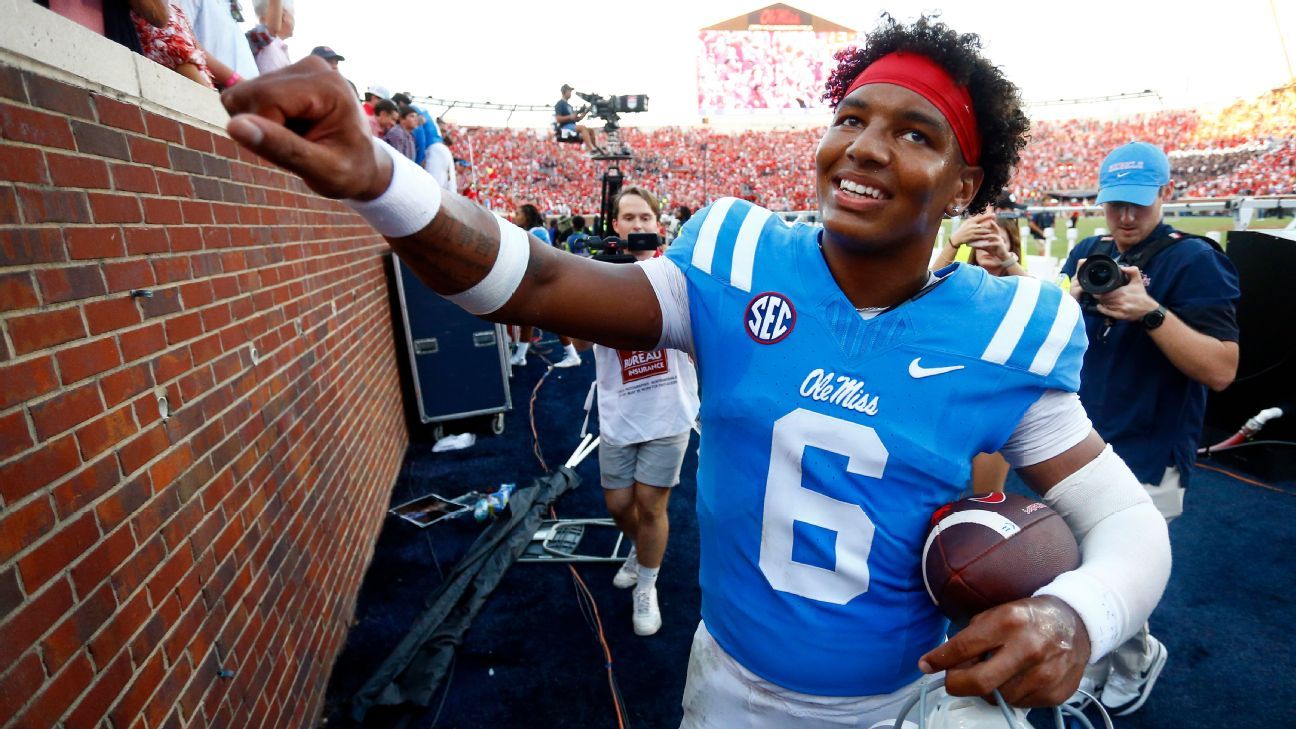
The number one overall selection has been a quarterback in five of the last seven years, but the 2026 draft is different. Fernando Mendoza, the Heisman Trophy winner from Indiana, is the presumptive QB1.
Why Defensive Prospects Are Dominating Early Rankings
There are three reasons for the defensive side of the ball dominating the draft. None of them are cyclical but rather structural, meaning they are a product of how college football developed talents over the past recruiting cycles:
- The edge rushing depth was one that hadn’t been seen since the 2019 draft: Bain, Arvel Reese, David Bailey. In Daniel Jeremiah’s Top 50 prospects for the NFL draft on NFL.com, edge rushers and defensive linemen make up one-third of the entire group.
- The linebacker group has some three-down potential. Anthony Hill Jr. from Texas and Sonny Styles from Ohio State are immediate starters who can rush the passer, cover tight ends, and stop the run without having to come off the field.
- Cornerback and safety depth are unusually high. Caleb Downs, Dontavius Thieneman, and several press-man corners are available to teams in every round. The depth from picks 15 to 60 is better than either of the last two drafts.
These three teams alone put defensive players in positions that quarterbacks and offensive linemen typically play. When you know that the top of the board is this stacked in one area of the game, you can predict the entire draft drops down for the other positions. Updated and verified information is just as important in casinos, so you can read about Slotozilla, a review portal, which provides it at their best. It’s a good place to learn everything important about slots, bonuses, and more. A comprehensive analysis of available options is essential in any field.
The Current State of the Quarterback Class (2026)
The 2026 quarterback class has a clear QB1 and a big drop-off after that. Fernando Mendoza won the Heisman at Indiana, completed 73% of his passes, and threw 27 red zone touchdowns with no interceptions. He’s ready for the NFL like few college quarterbacks are: high processing speed, accurate arm, functional mobility.
The rest of the class drops off significantly after Mendoza. According to Bucky Brooks’ position rankings on NFL.com, the rest of the class are players who are projected to be starters but don’t have the traits to warrant a trade for the first overall pick. The next tier down includes the following players:
- Ty Simpson (Alabama): athletic, mobile, has strong arms, but lacks starting experience and has struggled with decision-making in pressure situations. Ranked as the QB2 on the PFF draft board at pick 20.
- Garrett Nussmeier (LSU): improved his draft stock with a strong performance in the evaluation period, with improved study of the game. While he has strong arm strength, his decision-making in clean pockets has gotten mixed reviews.
- Carson Beck (Florida): has the physical skills but has struggled with inconsistent play over the last two seasons at Miami.
No draft class since 2013 has seen the first round go this deep without a second quarterback being taken in the top ten. The disparity between Mendoza and the rest of the field is significant enough that teams selecting in the 5-15 range are looking to defensive players before QBs.
Top Defensive Prospects to Watch in 2026
The defensive talents at the top of their class span every position group. These are the names appearing consistently across ESPN, NFL.com and PFF boards:
|
Player |
Position |
School |
Key Stat (2025) |
Projected Range |
|
Rueben Bain Jr. |
Edge |
Miami |
9.5 sacks, ACC DPOY |
Top 3 |
|
Mykel Williams |
DL |
Georgia |
8.0 sacks, 23.9% pressure rate |
Top 5 |
|
Mason Graham |
DT |
Michigan |
Big Ten DL of the Year |
Top 10 |
|
Sonny Styles |
LB |
Ohio State |
Top 10 |
|
|
Anthony Hill Jr. |
LB |
Texas |
Three-down starter |
Top 15 |
|
Caleb Downs |
S |
Ohio State |
Elite range, coverage skills |
Top 15 |
|
Dillon Thieneman |
S |
Oregon |
86 tackles, 2 INTs over 15 games |
Top 20 |
|
Landon Jackson |
DE |
Arkansas |
Consistent pressure, 6-7 frames |
Top 15 |
The table represents three position groups, namely the edge, the interior defensive line, and the back seven. The defensive talents are the main reason why quarterbacks are falling down draft boards.
Top Quarterback Prospects in the 2026 Draft
Despite the defensive dominance, teams that need a quarterback will still draft one in the first round. The quarterback market in the NFL follows organizational need. The passers generating first-round interest heading into April:
- Fernando Mendoza (Indiana);
- Ty Simpson (Alabama);
- Garrett Nussmeier (LSU);
- Carson Beck (Florida);
- Drew Allar (Pennsylvania).
The difference between Mendoza and the rest of the pack is that teams who select after the Raiders might choose to pass on a quarterback entirely and focus on defense – further supporting the idea of a defense-heavy first round of mock drafts.
Expert Predictions and Mock Draft Insights (March 2026)
The major draft analysts converge on the same conclusion: this is a defense-first draft. The consensus shapes up as follows:
- ESPN’s Mel Kiper and Field Yates combined their big boards to create a consensus top 10 that includes Mendoza as the only quarterback. The rest of the top 10 consists of defensive players and one wide receiver.
- Daniel Jeremiah’s board for NFL.com includes Mendoza as the number one overall prospect on his 3.0 board. Jeremiah also includes multiple defensive players, Love, Styles, and Tate, ranked ahead of all quarterbacks except Mendoza.
- PFF’s big board includes Bain as the number one overall prospect. Ty Simpson is included as the highest-ranked quarterback at number 20 overall. Five quarterbacks are included in the top 100 on PFF’s board: Mendoza, Simpson, Moore, Nussmeier, and Allar.
The draft is just a month away. The boards will continue to evolve after pro days and private workouts. But the underlying reality of this draft class is not going to change between now and April: the defensive talents on this board are deeper, more pro-ready, and more consensus than the quarterbacks.
 Charlie Campbell